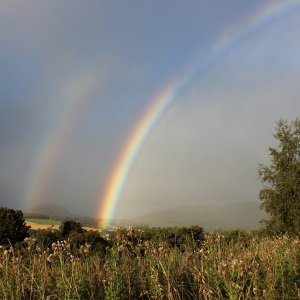
Few words about the weather
Weather is one of the main topics of conversation in Scotland. And not without reason. It is said that there are only two seasons in Scotland: autumn and spring. There is some truth in this. Scotland rarely experiences extreme temperatures. Despite being quite far north, winters are usually mild and the temperature rarely drops below 0 degrees during the day. On the other hand, in summer it is hard to find temperatures above 30 degrees. Of course, extremes can happen, but they are usually talked about for years afterwards. This moderate climate would be great if it weren’t for the amount of rainfall and lack of sunshine. Contrary to popular opinion, Scotland is not always covered in a thick layer of clouds. In fact, it is large enough that it rarely happens that the whole country is in an area of bad weather at once. Usually, if it rains in the west, it is sunny in the east, and vice versa. If you plan a visit to Scotland well in advance, it is good to prepare at least 4 versions of trips - one for each part of Scotland. The east coast with Aberdeenshire county and Cairngorm National Park is usually more sunny. The western part of the country with its famous islands, amazing beaches and wonderful mountains is more capricious, but there are plenty of beautiful days there in summer. North of Loch Ness begins the most beautiful part of Scotland according to us, but it is obviously much colder there than in the south or in the centre of the country. On the other hand, the Moffat hills and Ayrshire region in the south are relatively warm, and although the hills are lower and the beaches are not as captivating as in the north, it is still worth visiting these areas. If it happens by chance that the whole of Scotland is under a cloud cover, there is always Central Scotland with castles and museums in Edinburgh or exhibitions and restaurants in Glasgow. If you prepare a trip for each of these regions, even if you plan your trip well in advance, you have a good chance that the weather will be good (in one of them at least). The only problem then is accommodation, because booking hotels in several regions at once is not something we would recommend and although Scotland has a large hotel base almost in every corner, availability of places with a short term is limited (or very expensive) - see Hotels and tourist base - and it is worth getting a tent or renting a camper van. On the other hand, if you live in Scotland and care about one or two-day trips here and there, we suggest something that Jola calls hunting for weather. Thanks to relatively large progress in meteorology, many websites offer quite accurate weather maps with a week’s advance. We usually use BBC’s website, but we don’t focus on temperatures or icons for a given location, but we follow the nicely presented cloud flows and probability of precipitation on their map. We often also use Met Office, especially when we plan a trip to the mountains, as their forecast also shows the expected weather on individual mountain peaks. Assessing the accuracy of forecasts MetOffice is so far the best, BBC second, then long, long nothing. In any case, good weather in Scotland is usually somewhere, you just have to find it. Of course, there are months really gloomy, when we would not recommend visits - especially from October to February. From our experience it happens then weekends when clouds cover almost the entire area of Scotland. Of course, when there is a more sunny period then nothing beats a trip to the snow-covered peaks of the Highlands.


