
The Red Ramparts of Angus: Navigating the Sea Caves and Historic Trails of Seaton Cliffs
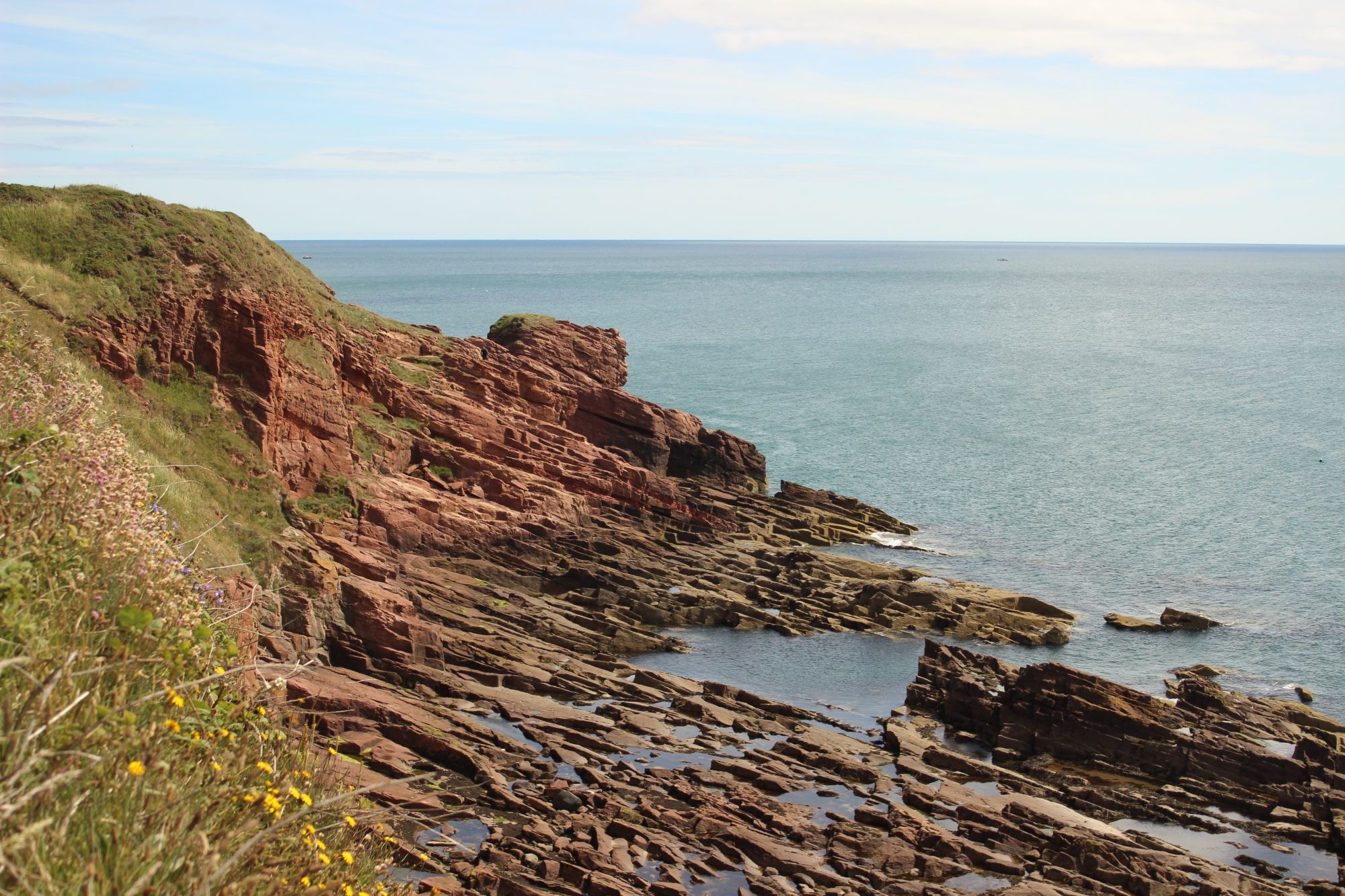
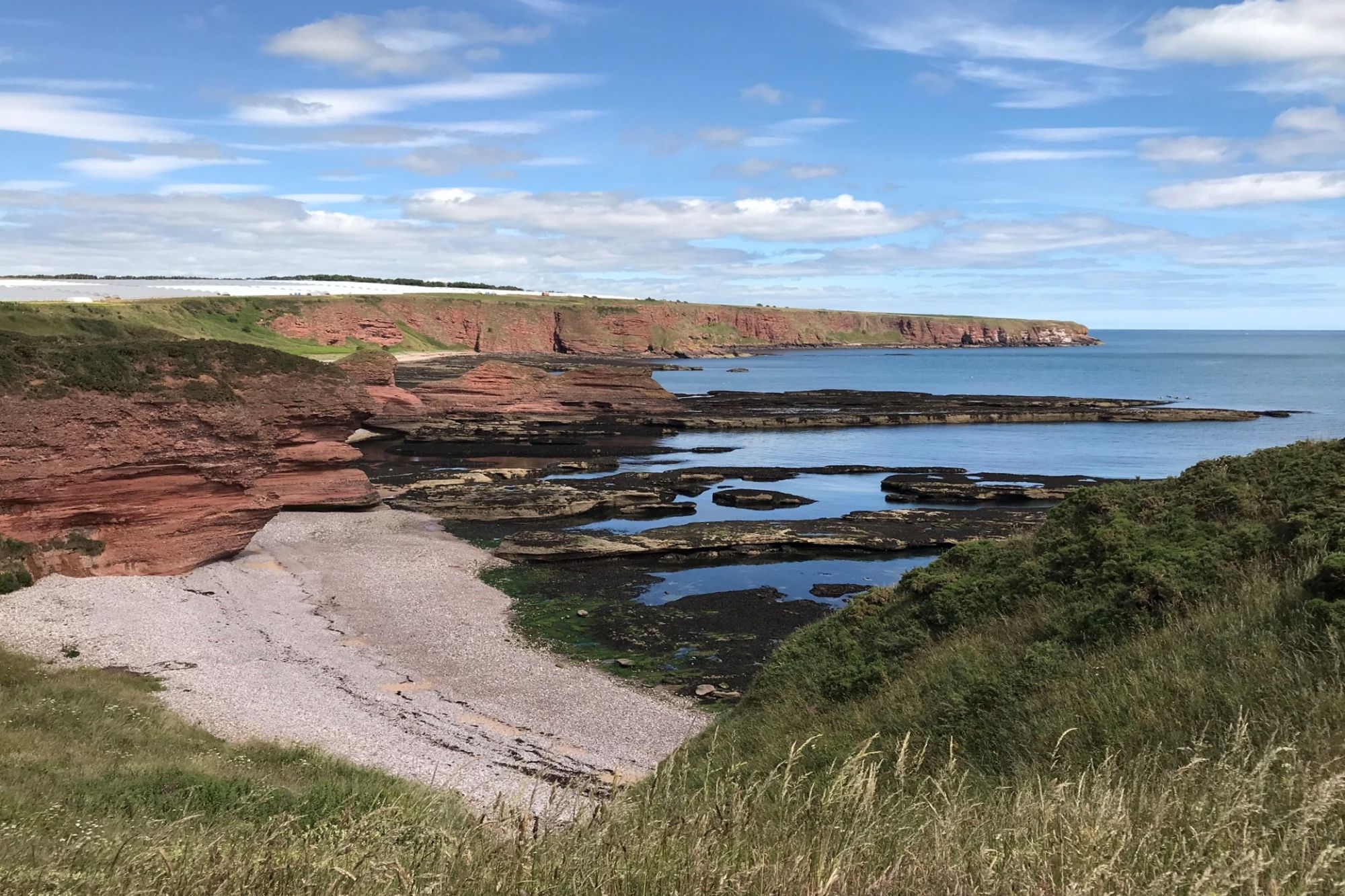
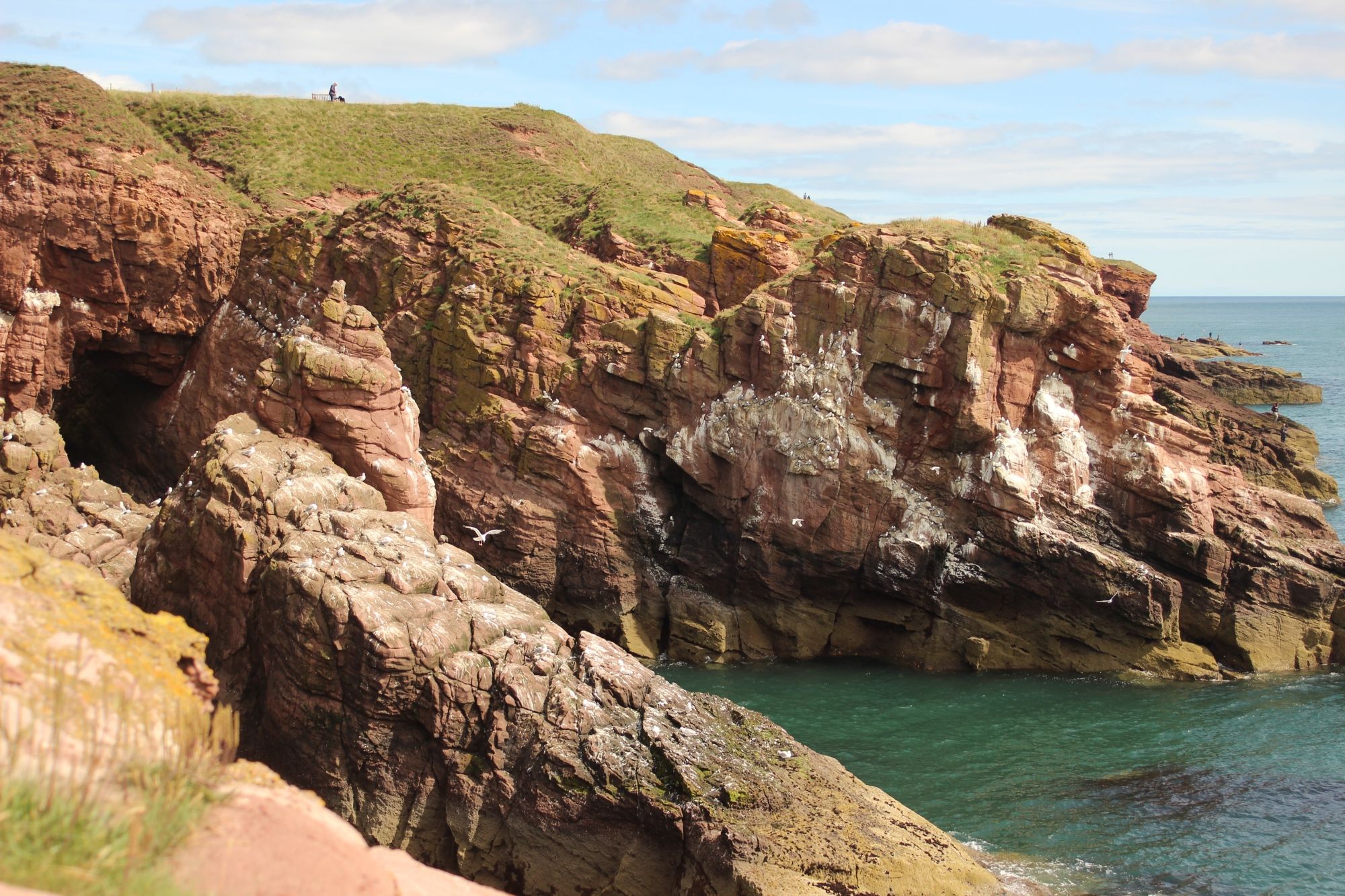
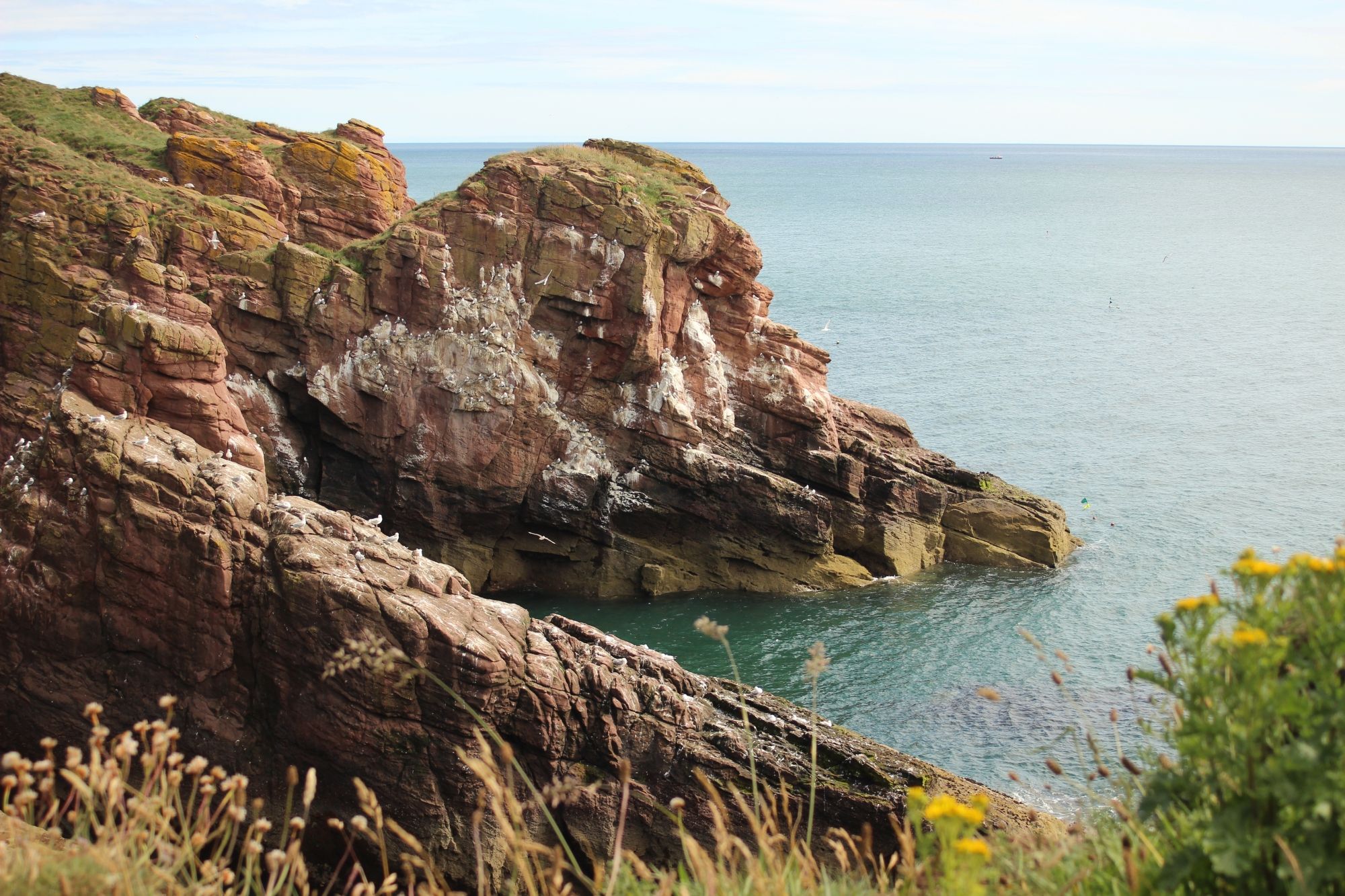
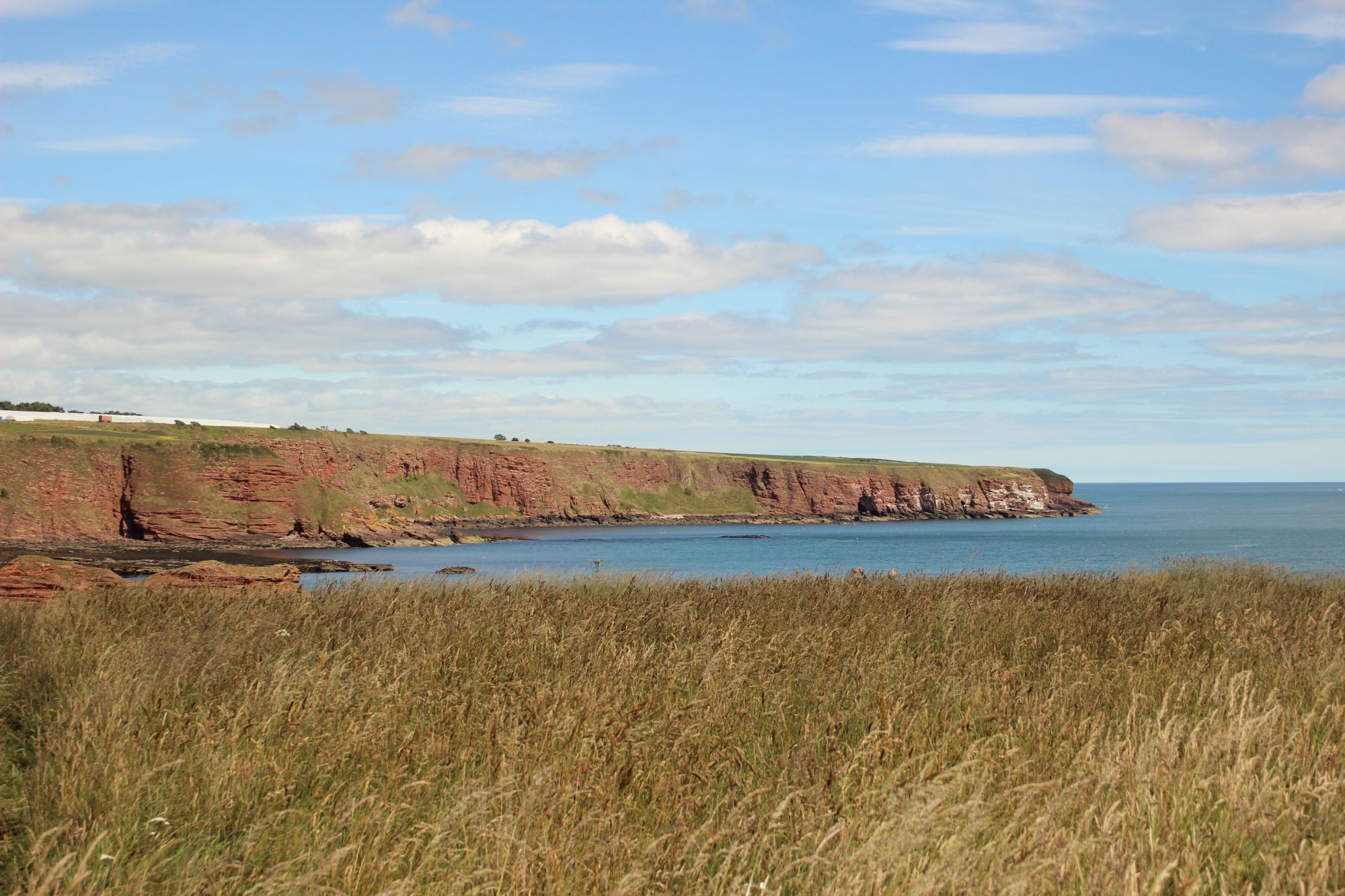
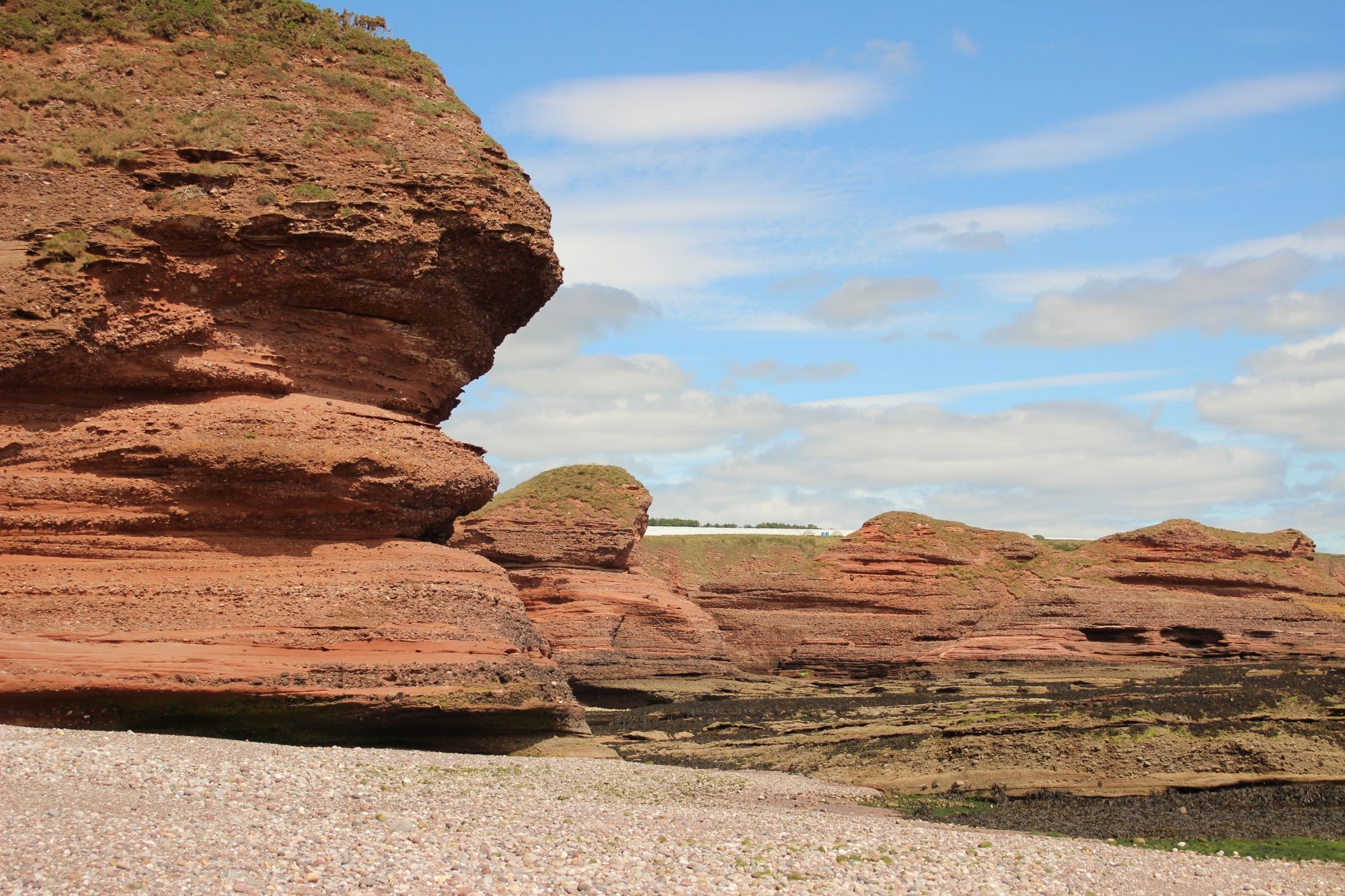
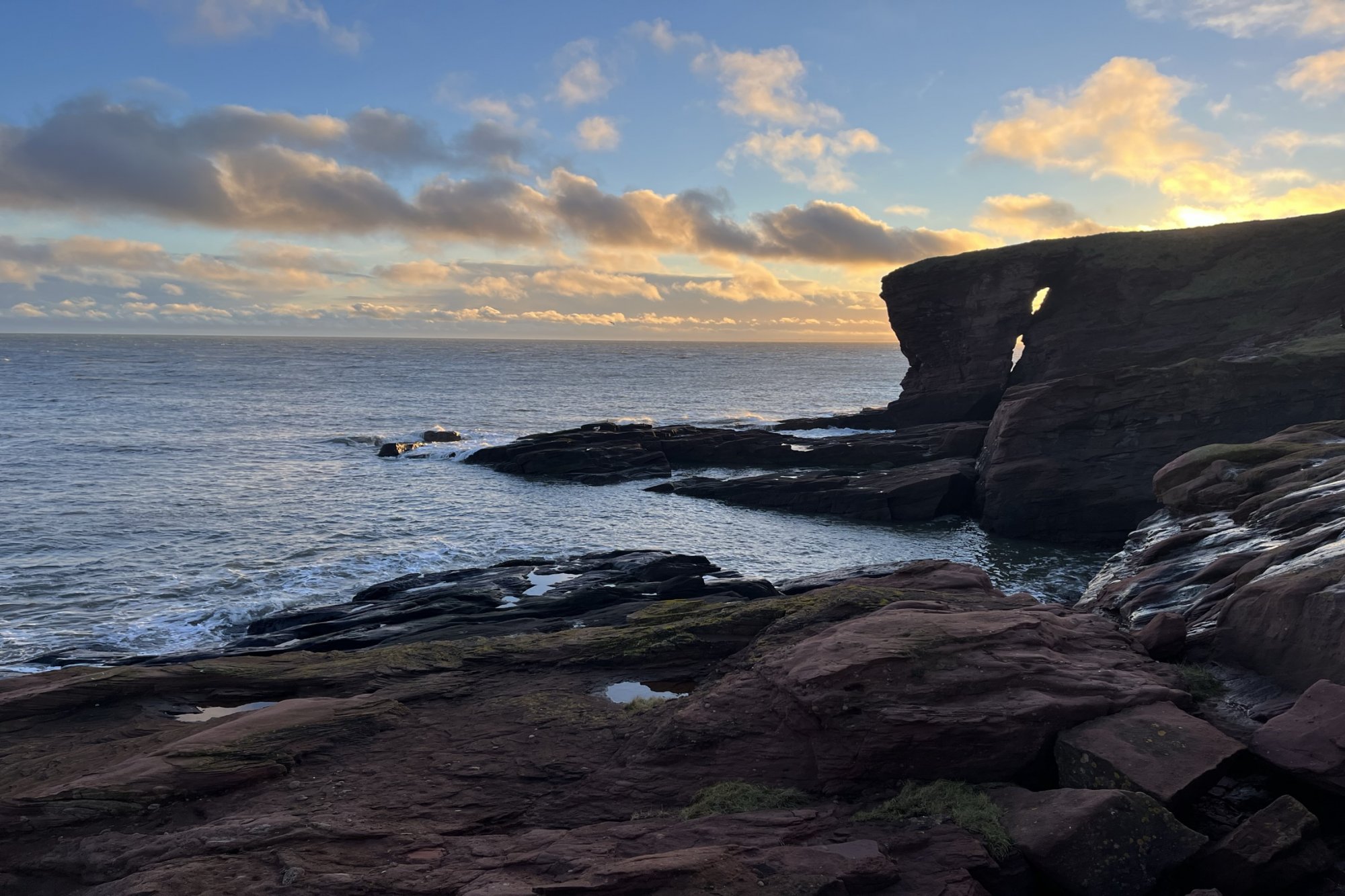
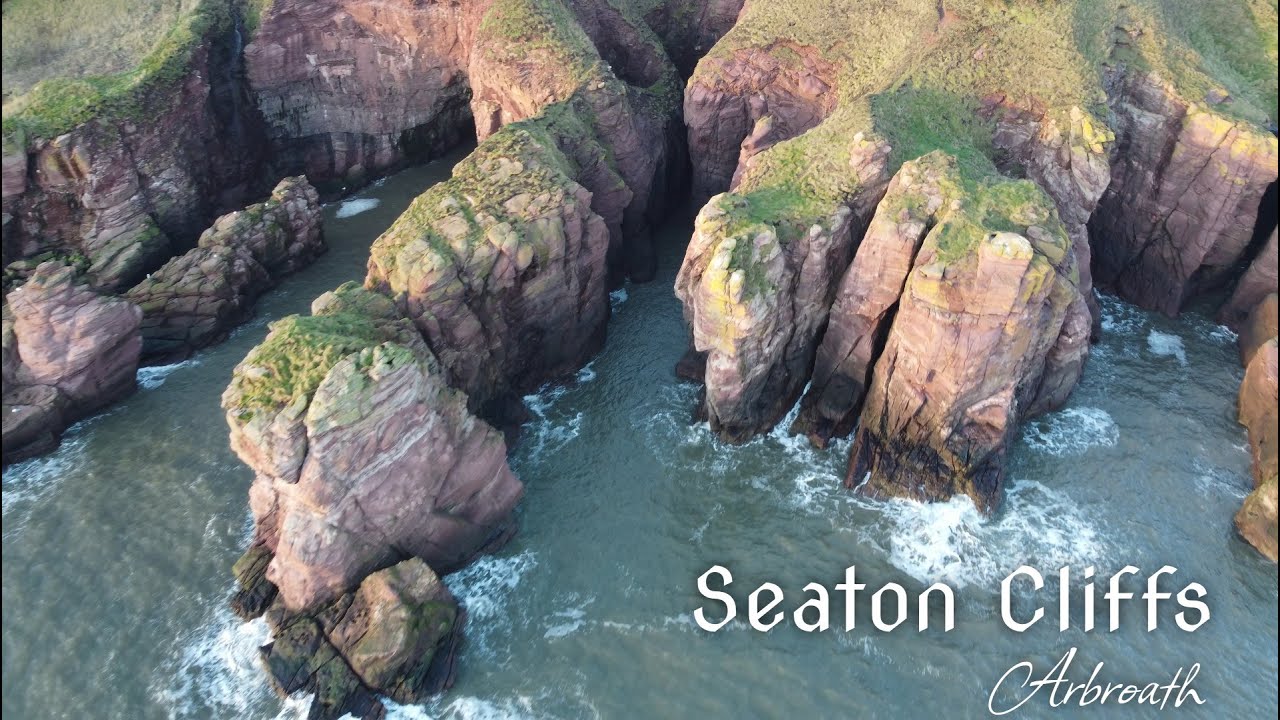
Stretching dramatically north from the historic harbor town of Arbroath, the Seaton Cliffs Nature Reserve stands as a monumental showcase of Devonian Old Red Sandstone. Carved over millennia by the relentless hydraulic action of the North Sea, this spectacular coastal sanctuary is famous for its intricate maze of massive natural sea arches, jagged stacks, and deep, dark fissures. What truly sets Seaton Cliffs apart from other rugged Scottish coastlines is the incredible accessibility of its terrain: a wide, beautifully maintained grassy pathway snakes safely along the very crest of the cliffs. This layout allows casual walkers and family adventurers to absorb panoramic maritime views, while offering seasoned explorers and independent creators a highly dramatic vantage point to study the raw forces of coastal erosion.
The Architecture of the Red Shore: Arches, Blowholes, and Secret Steps
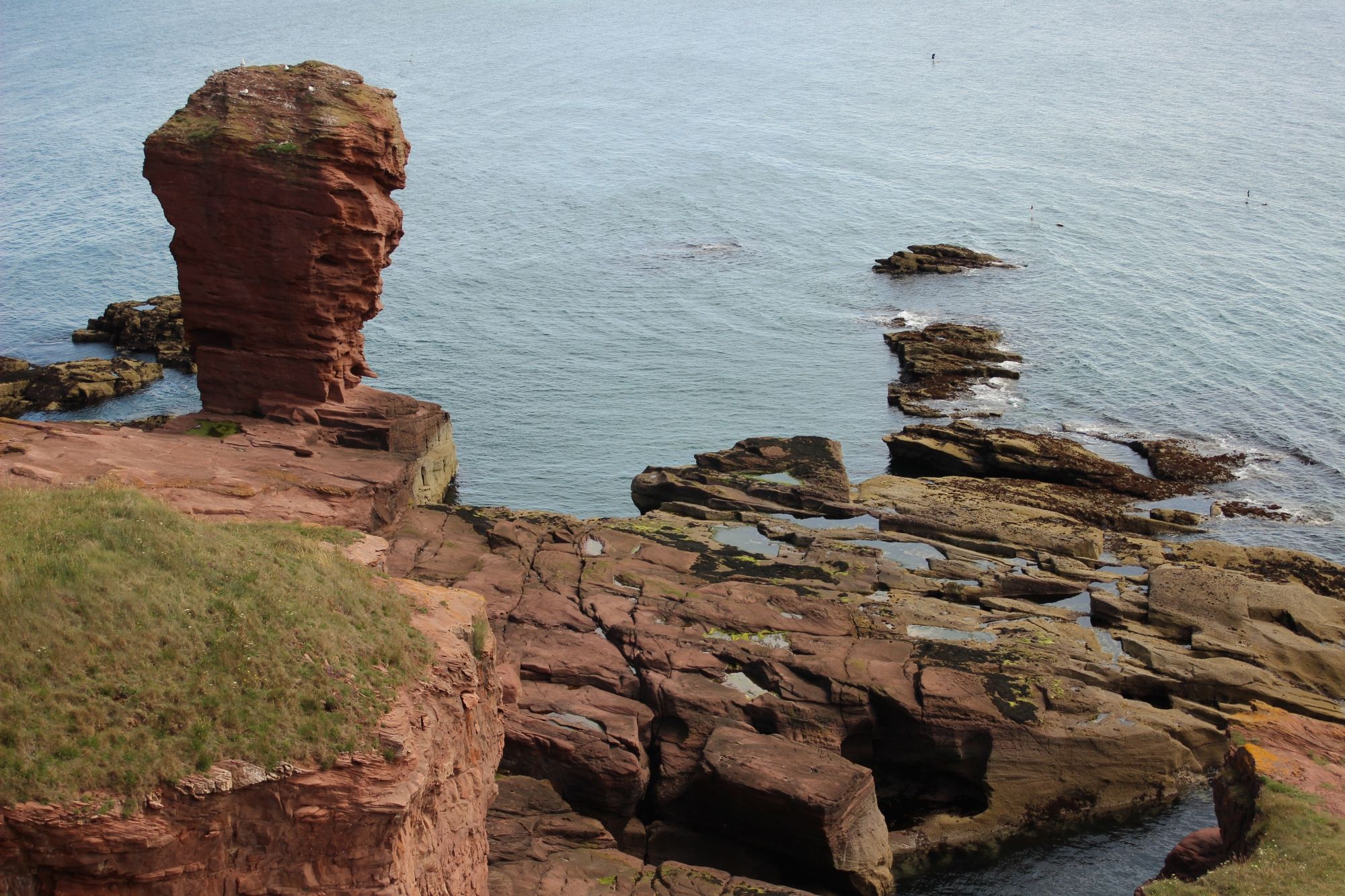
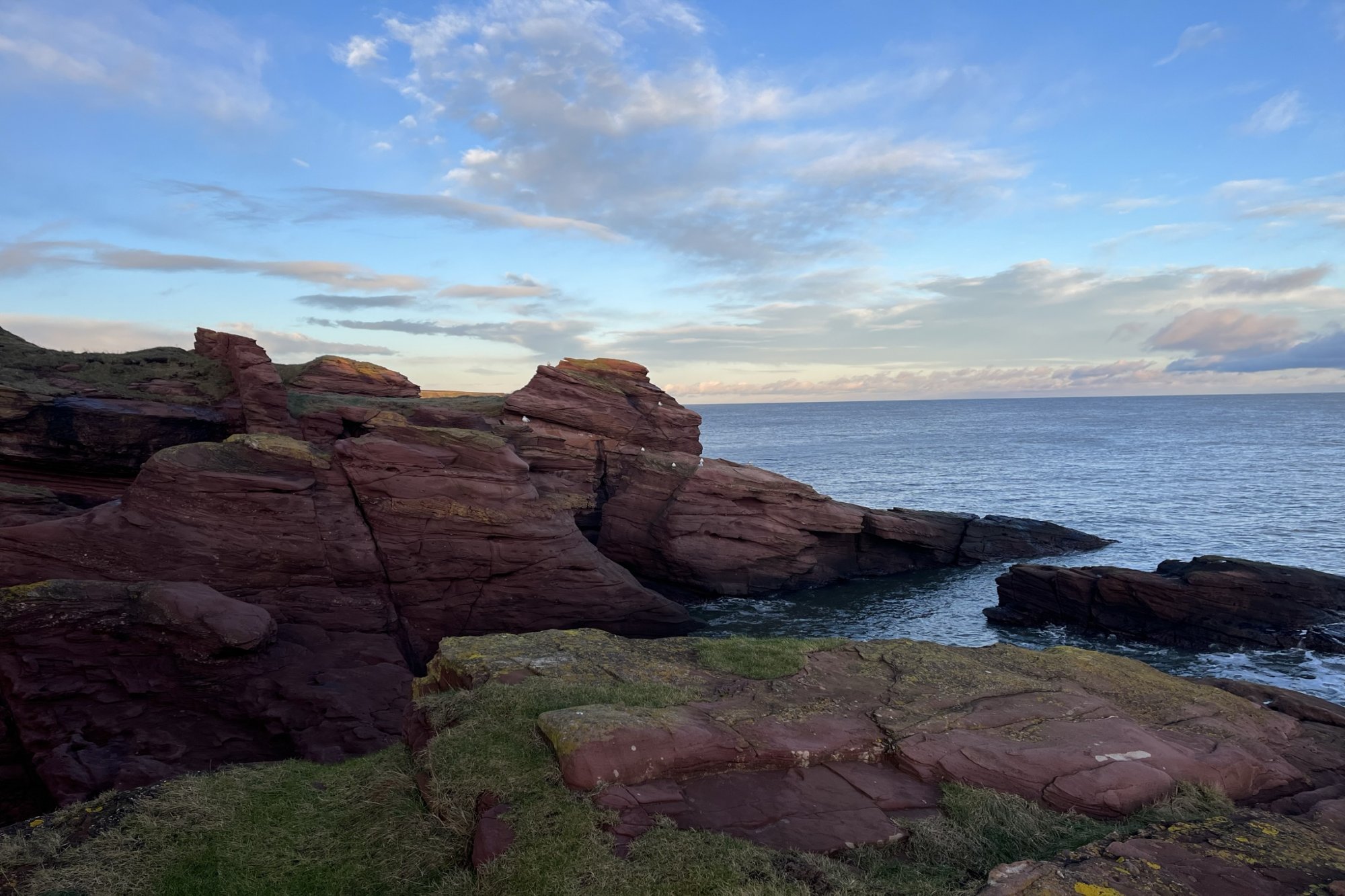
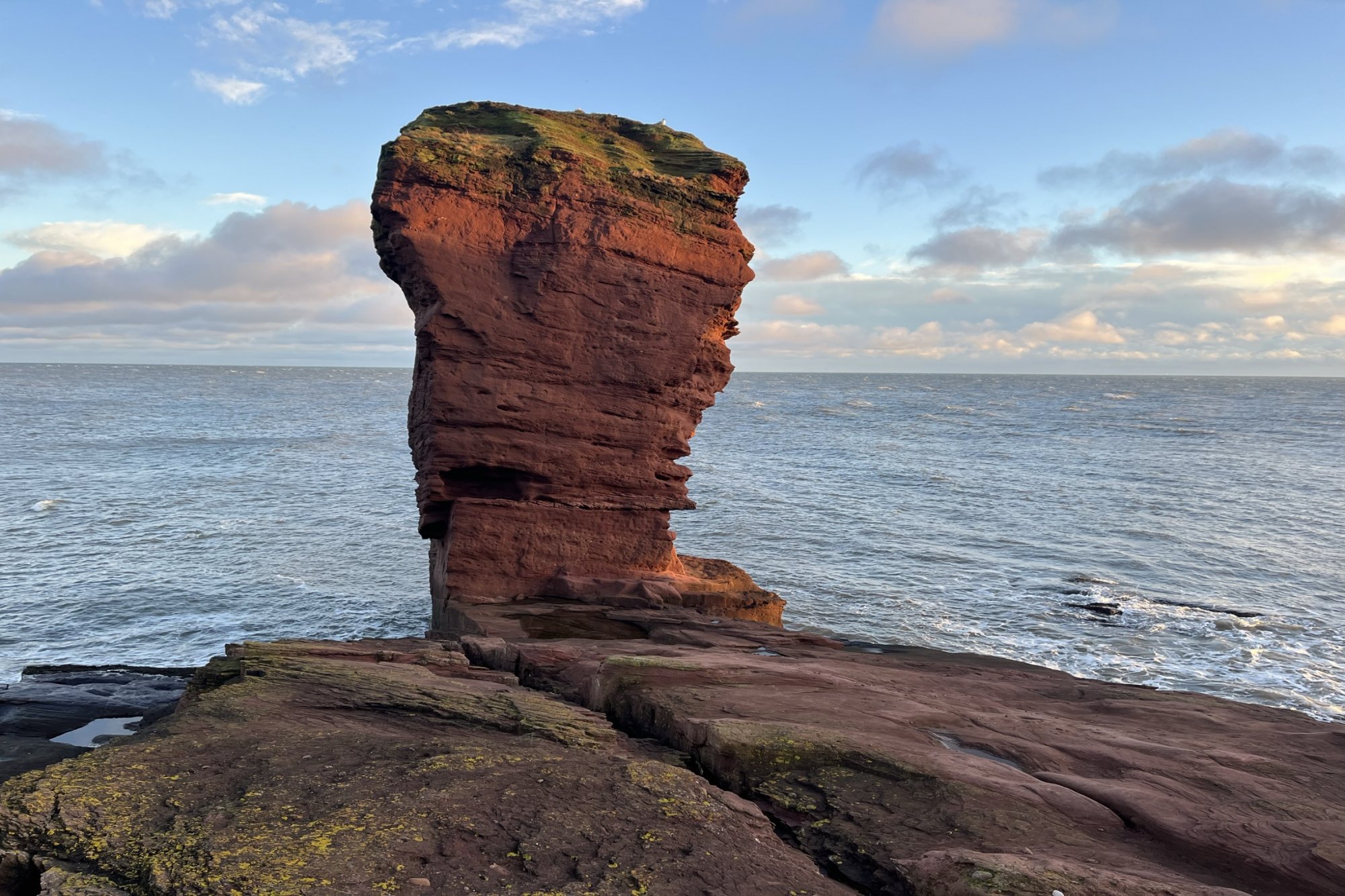
The physical structure of Seaton Cliffs is a masterclass in dynamic coastal geometry, with several prominent formations offering entirely distinct visual scales:
- The Deil's Head and Needle's Eye: Prominent, wave-beaten stone structures rise directly from the surf below, including the famous Needle's Eye—a colossal natural rock arch that perfectly frames the breaking waves and serves as a classic composition for wide-angle landscape tracking.
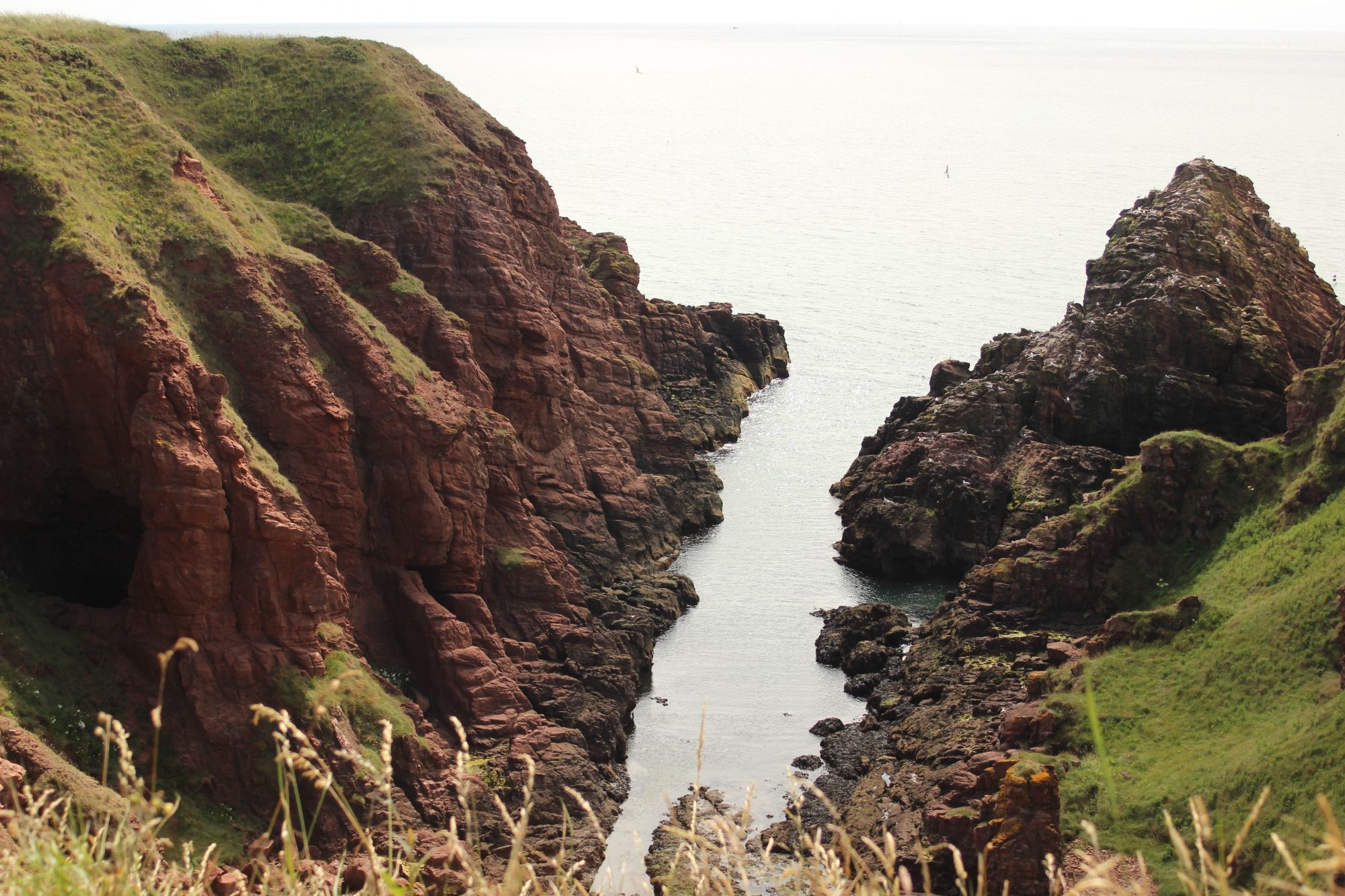
- The Hidden Descent Paths: For travelers seeking a closer encounter with the sea, a series of narrow, steep dirt paths branch off the main trail, snaking down the cliff faces to the rocky beaches below. While some descents are relatively straightforward, others require careful footing and steady balance on loose stone, particularly after typical eastern sea frets (haars) damp the grass.
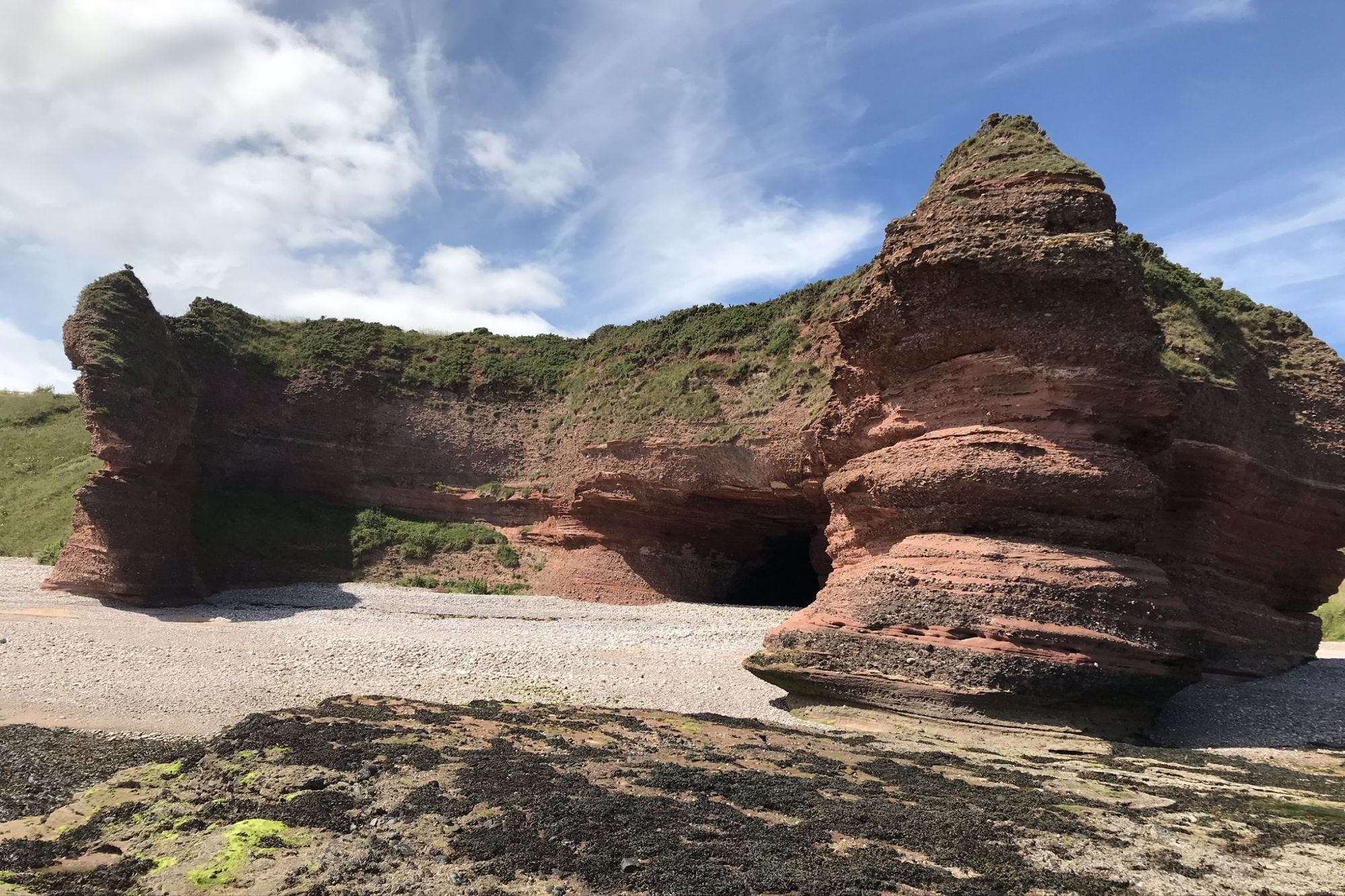
- The Submerged Cavern Network: The true secret of Seaton Cliffs lies at the waterline, which is honeycombed with an extensive network of sea caves, including the legendary Gaylet Pot—a massive, collapsed blowhole located a quarter-mile inland where the sea still boils through a subterranean tunnel.
Coastal Logistics: Exploring by Land and Water
Experiencing this stunning landscape requires an understanding of its dual nature, balancing easy clifftop walking with advanced marine exploration:
- The Clifftop Route: Starting from the large public parking areas at Victoria Park in Arbroath, the main path is flat, grass-lined, and exceptionally user-friendly. It provides an uncrowded environment for daytime walks, though there are no public toilets or commercial shops once you pass the park boundary, requiring travelers to pack in their own supplies.
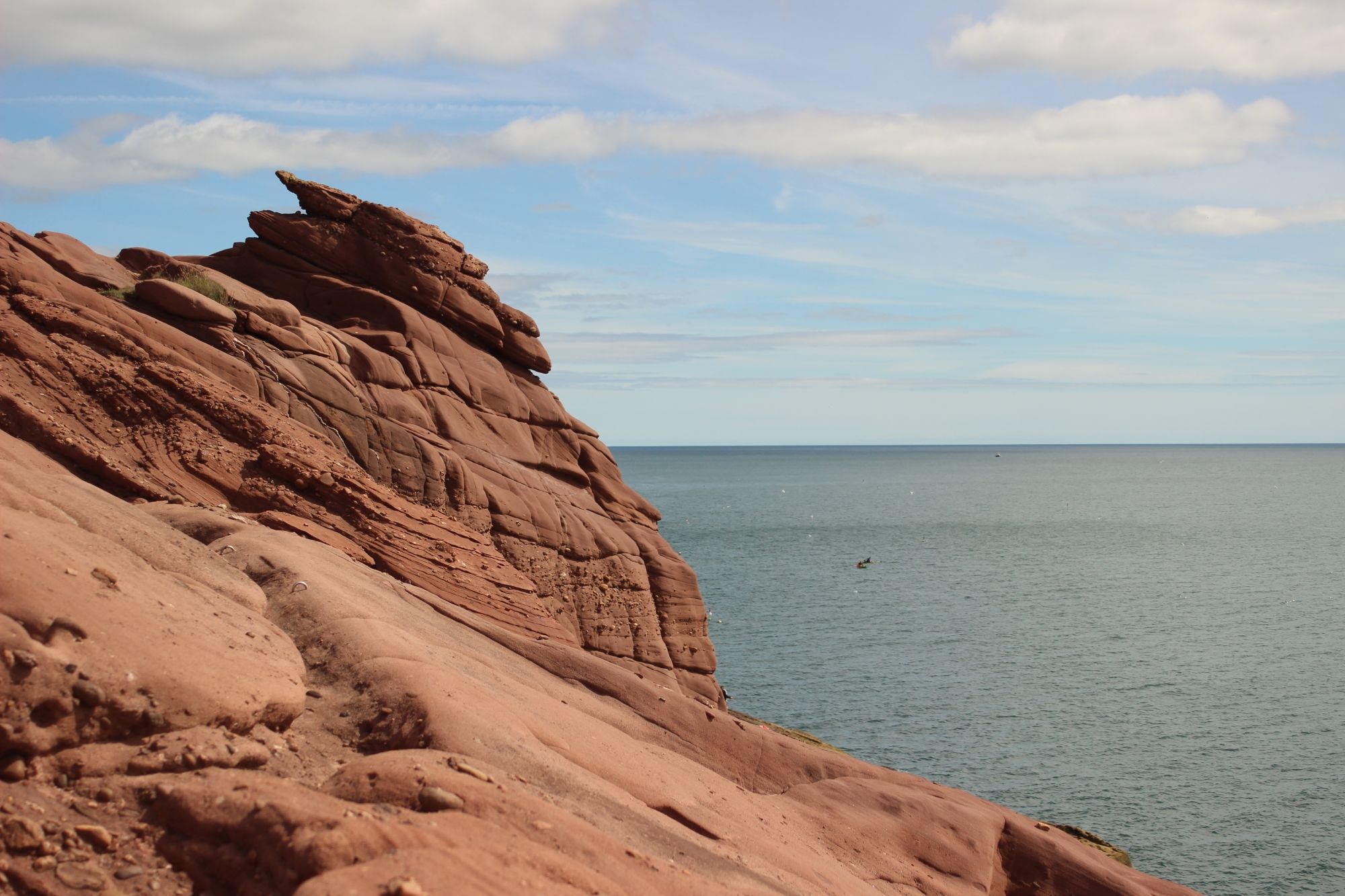
- The Kayak Frontier: While the clifftop path offers magnificent perspective, the ultimate way to appreciate the true scale and depth of the cliffs is from the water. Because many of the most spectacular caves are completely submerged at high tide or accessible only by boat, taking a sea kayak out allows adventurers to paddle straight into the dark, echoing chambers of the red sandstone. Local adventure companies operate guided coastal paddling expeditions, providing the specialized safety gear, sea-state knowledge, and guiding expertise required to navigate the complex tidal currents safely.
Cinematography, Audio, and Technical Production Integration
For travel content creators, stock footage contributors, and digital filmmakers, Seaton Cliffs serves as an incredible open-air studio, offering unique opportunities to capture high-contrast environmental textures:
- Managing Surface Reflection and Sandstone Warmth: The intense, fiery orange and deep red tones of the Devonian sandstone create a stunning visual contrast against the deep blues and white foam of the North Sea. To prevent the brilliant surface glare from washing out these rich colors, utilizing a high-efficiency Circular Polarizer (CPL) is absolutely critical. Filming should ideally be scheduled during the late afternoon golden hour; the low angle of the sun strikes the eastward-facing cliff walls directly, making the red stone appear to glow with a rich, cinematic amber warmth. Pairing this with a variable ND filter allows creators to shoot with wide apertures ($f/2.0$ to $f/2.8$), rendering the distant horizon into a soft, smooth backdrop while keeping the jagged geological details in razor-sharp focus.
- Acoustic Tracking within the Rock Formations: The deep fissures and sea caves along the trail generate an extraordinary acoustic landscape, but the open cliff paths are frequently subject to severe, high-velocity coastal winds. To cleanly capture the atmospheric soundscape—such as the deep, booming echo of waves sloshing inside the sea caves and the high-frequency cries of nesting seabirds—field recorders should be positioned down within the sheltered lee of the cliff descents or near cave mouths. Enclosing microphones within a professional, multi-layered fur windjammer is essential to isolate these rich, low-frequency marine sounds from destructive wind distortion.
Conclusion: The Definitive Angus Coastal Experience
Seaton Cliffs represents the perfect marriage of raw, wave-swept geological scale and accessible wilderness exploration. By matching its dramatic red sandstone arches and hidden cave networks with a welcoming clifftop trail and local guided kayaking opportunities, this Arbroath treasure leaves a lasting impression on the creative soul. It remains a timeless, essential sanctuary—a brilliant, light-filled arena where the relentless rhythm of the North Sea meets the ancient red stone of Angus, rewarding all who come to walk along its majestic edge.