


The Sentinel of the Buchan Coast: Aesthetic Grandeur, Maritime Solitude, and Both Shorelines of Rattray Head
Protruding dramatically into the North Sea along the Buchan coastline of Aberdeenshire, Rattray Head is one of the most hauntingly picturesque coastal landmarks in Eastern Scotland. Marking the pivotal geographic point where the shoreline curves toward Fraserburgh to the north and Peterhead to the south, Rattray Head is famous for its iconic offshore lighthouse, towering marram-clad dune systems, and vast expanses of golden sand.
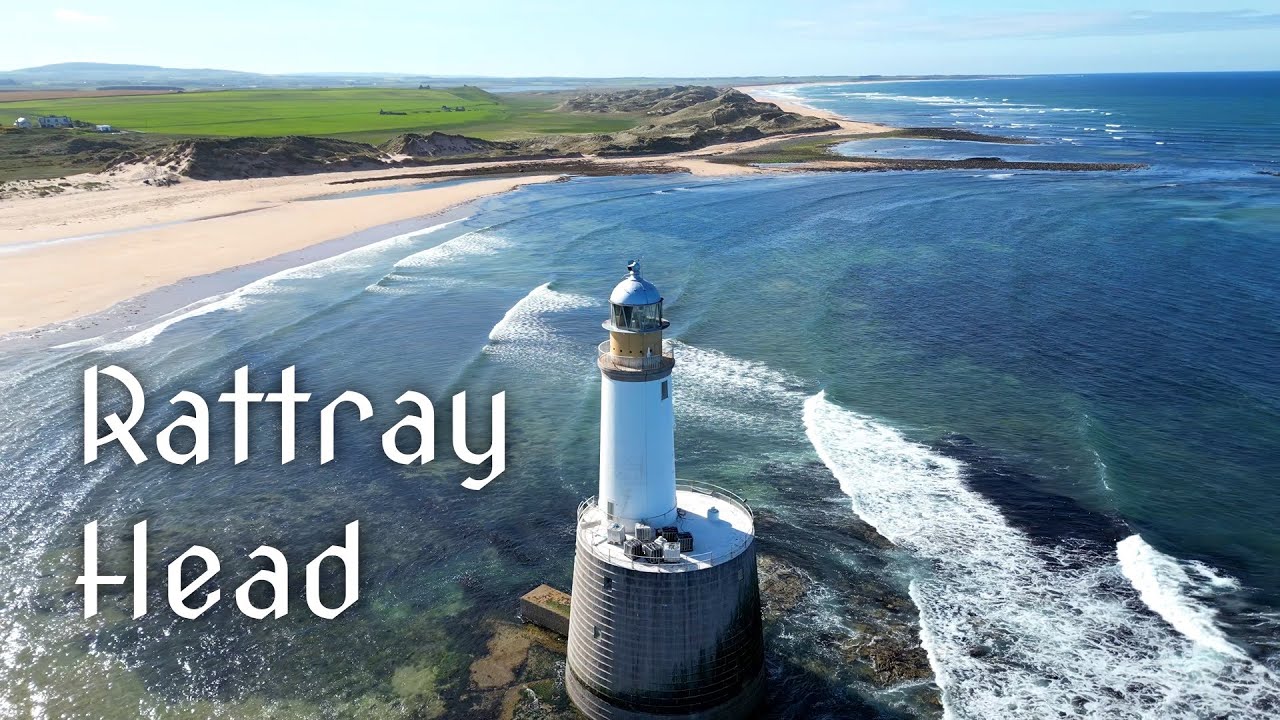
The headland naturally divides into two distinct sweeping beaches—Rattray South Beach (stretching toward Strathbeg) and Rattray North Beach (sweeping toward St Combs)—offering a tranquil, wind-sculpted haven of maritime light, rich birdlife, and profound coastal solitude.
The Aesthetic Tapestry: Offshore Towers, Endless Horizons, and Dramatic Light
The visual enchantment of Rattray Head centers on its striking architectural anchor, vast open skies, and shifting coastal light:
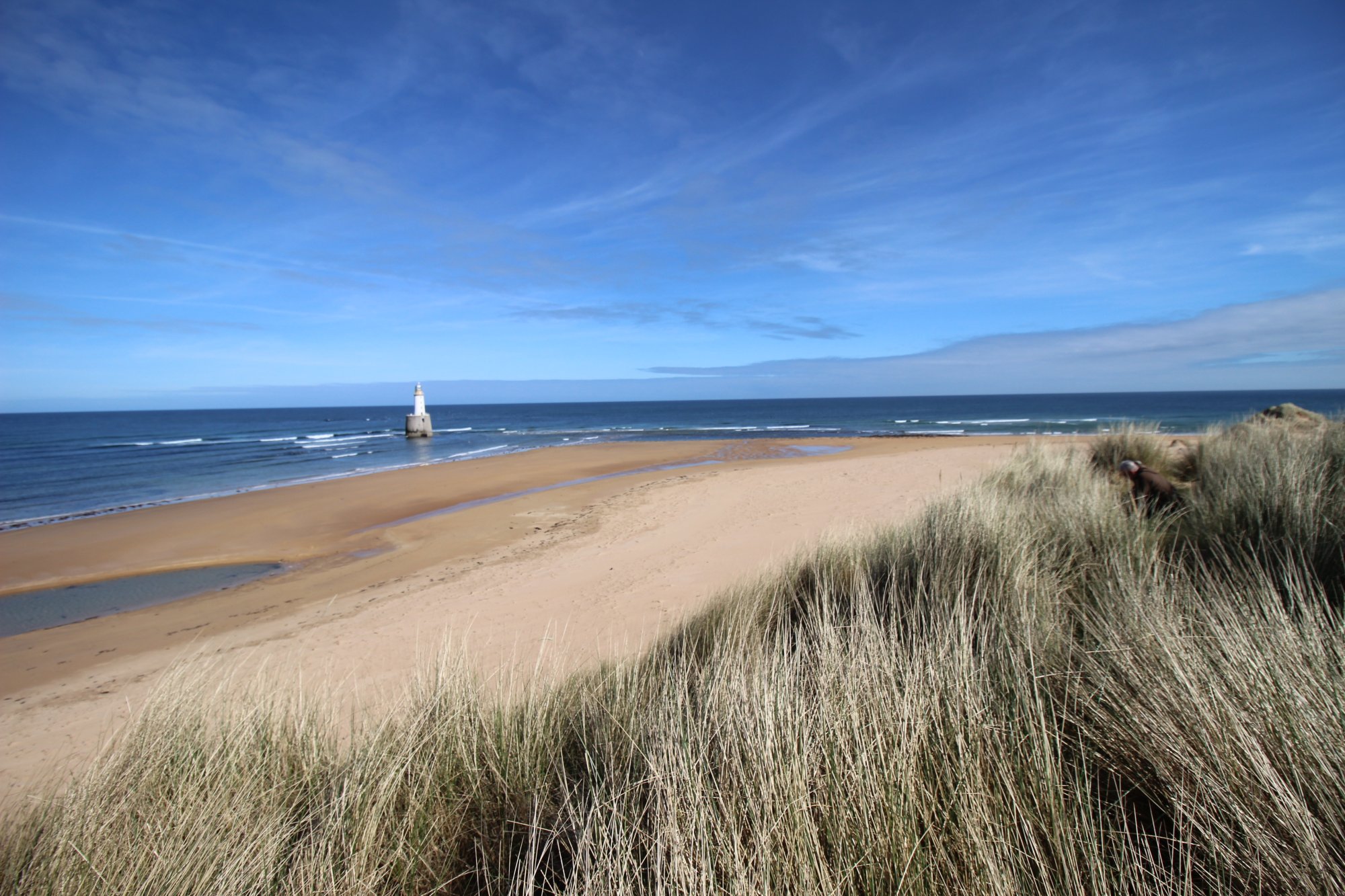
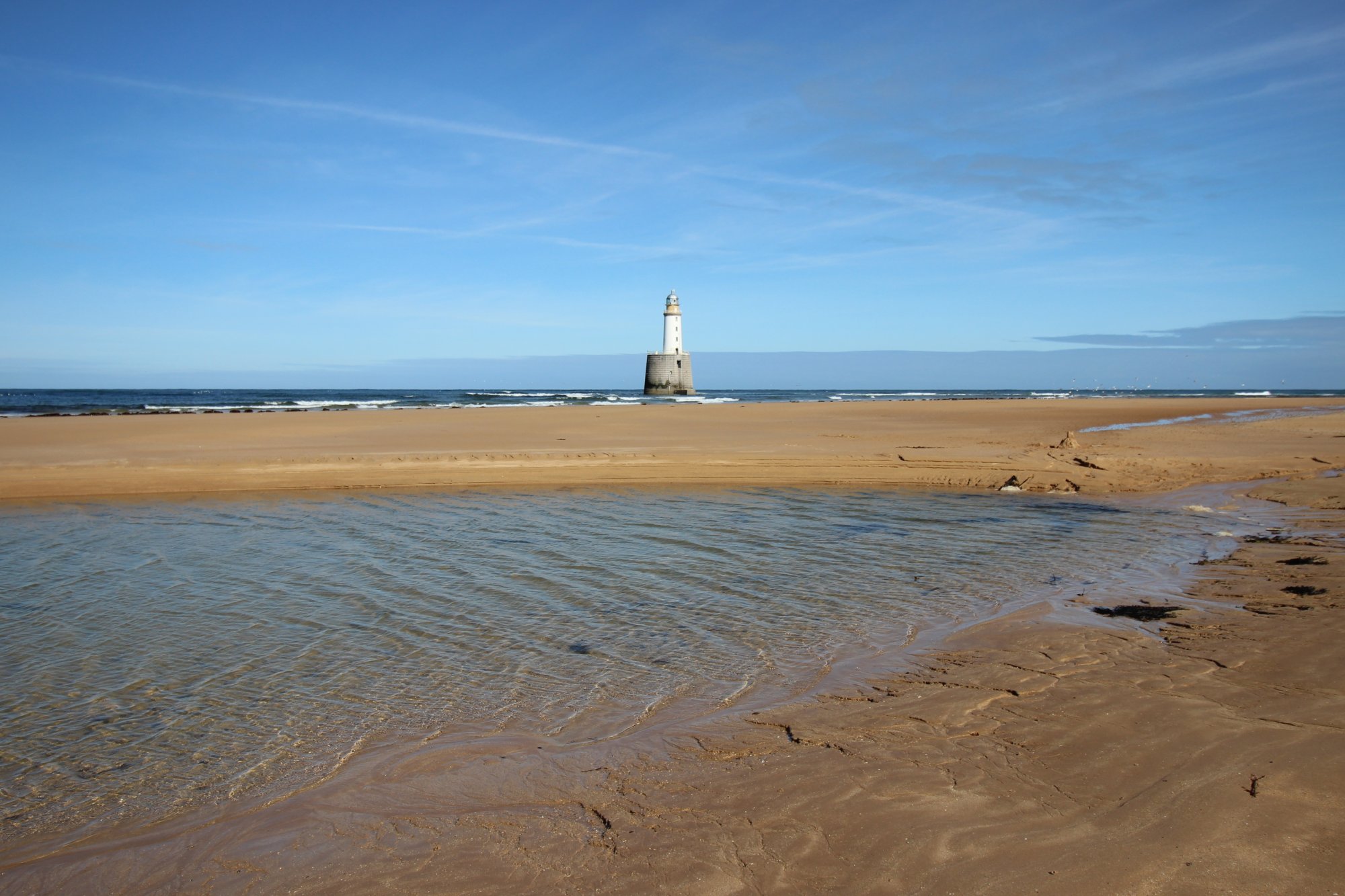
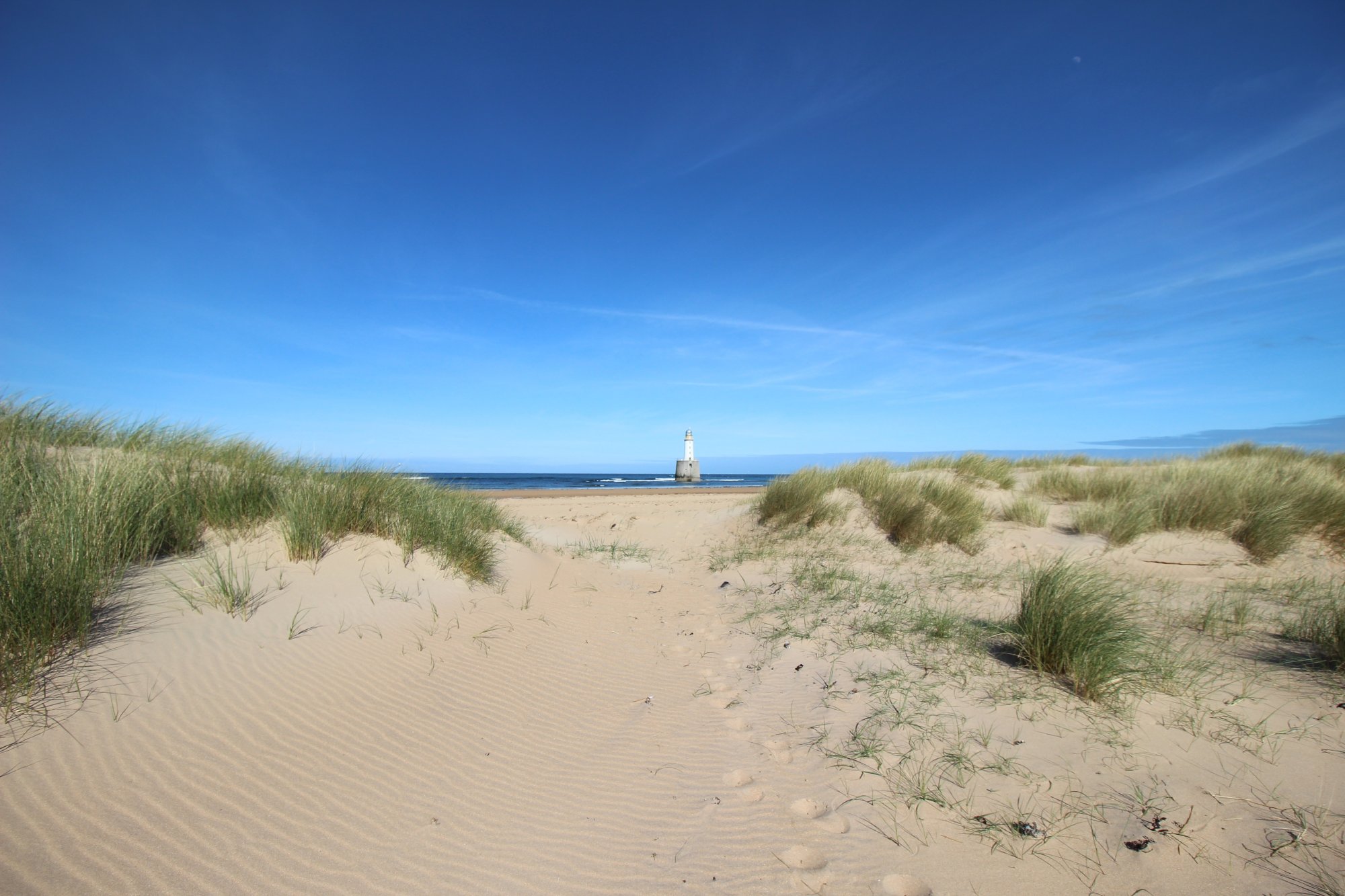
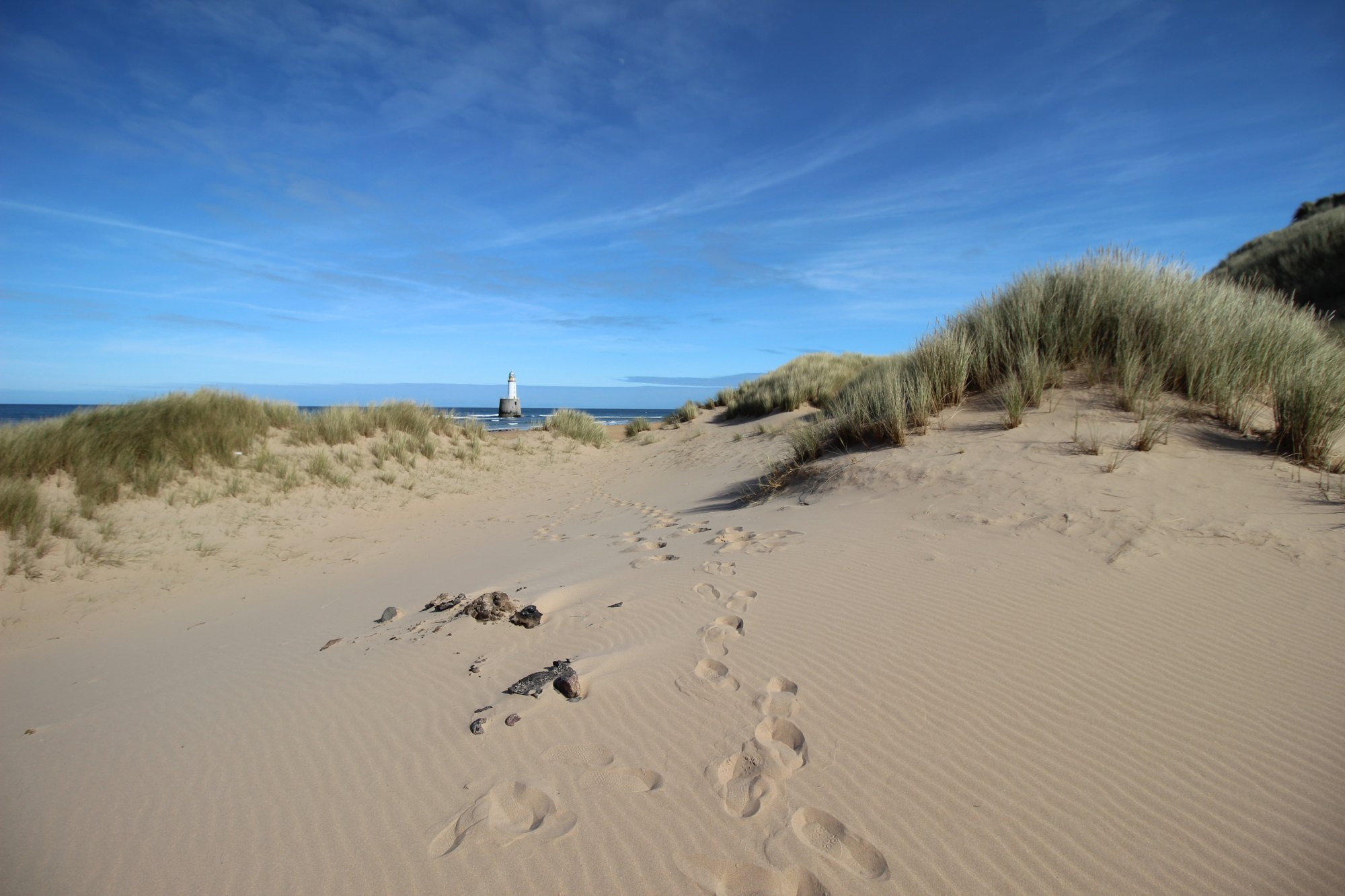
- The Isolated Offshore Lighthouse: Rising directly out of the ocean rocks just offshore, the 120-foot granite lighthouse of Rattray Head stands as a solitary sentinel against the waves. Built upon the treacherous Rattray Briggs reef, the tower becomes entirely surrounded by churning sea at high tide, while low tide reveals a mysterious granite causeway leading toward its base.
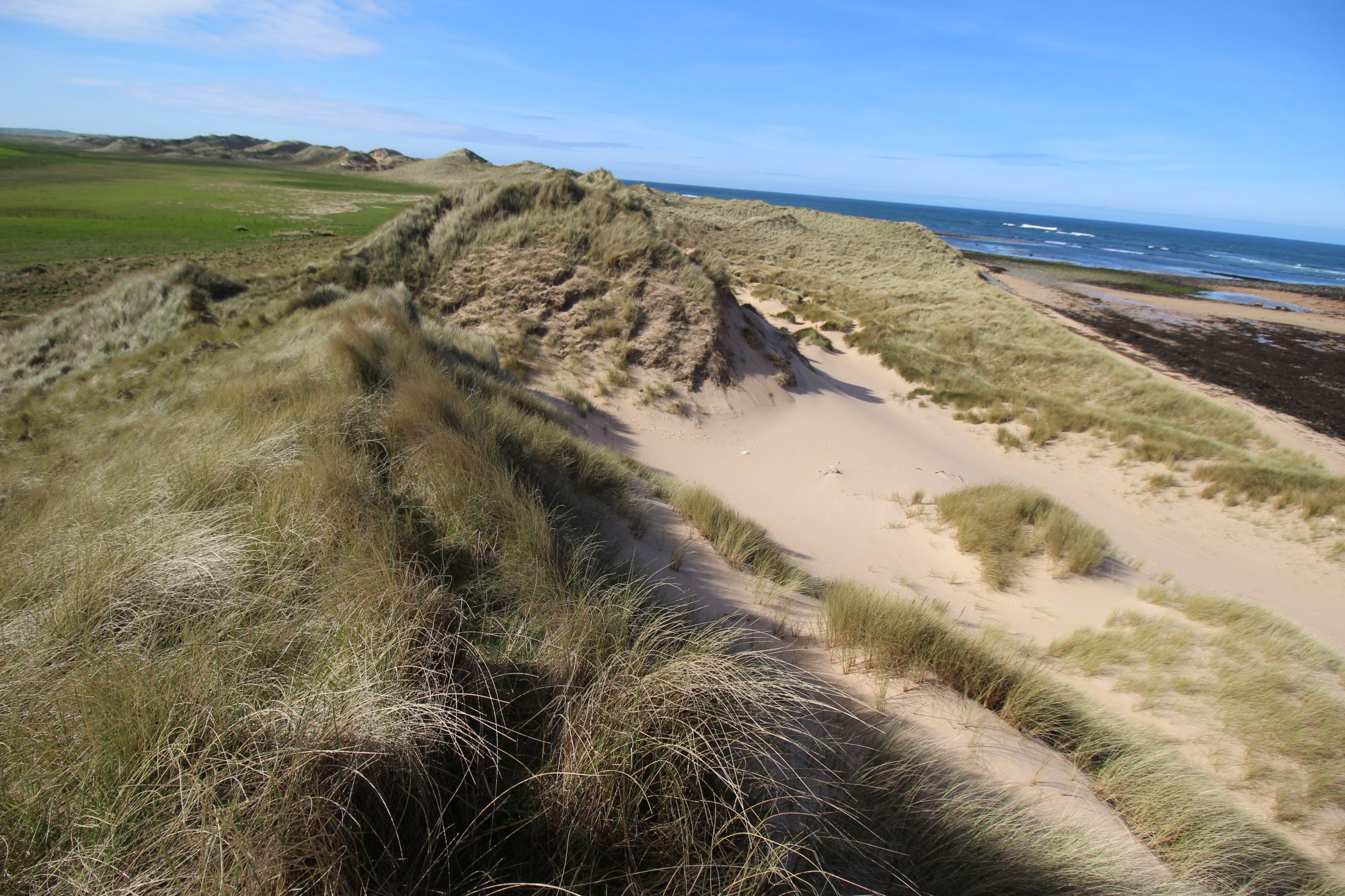
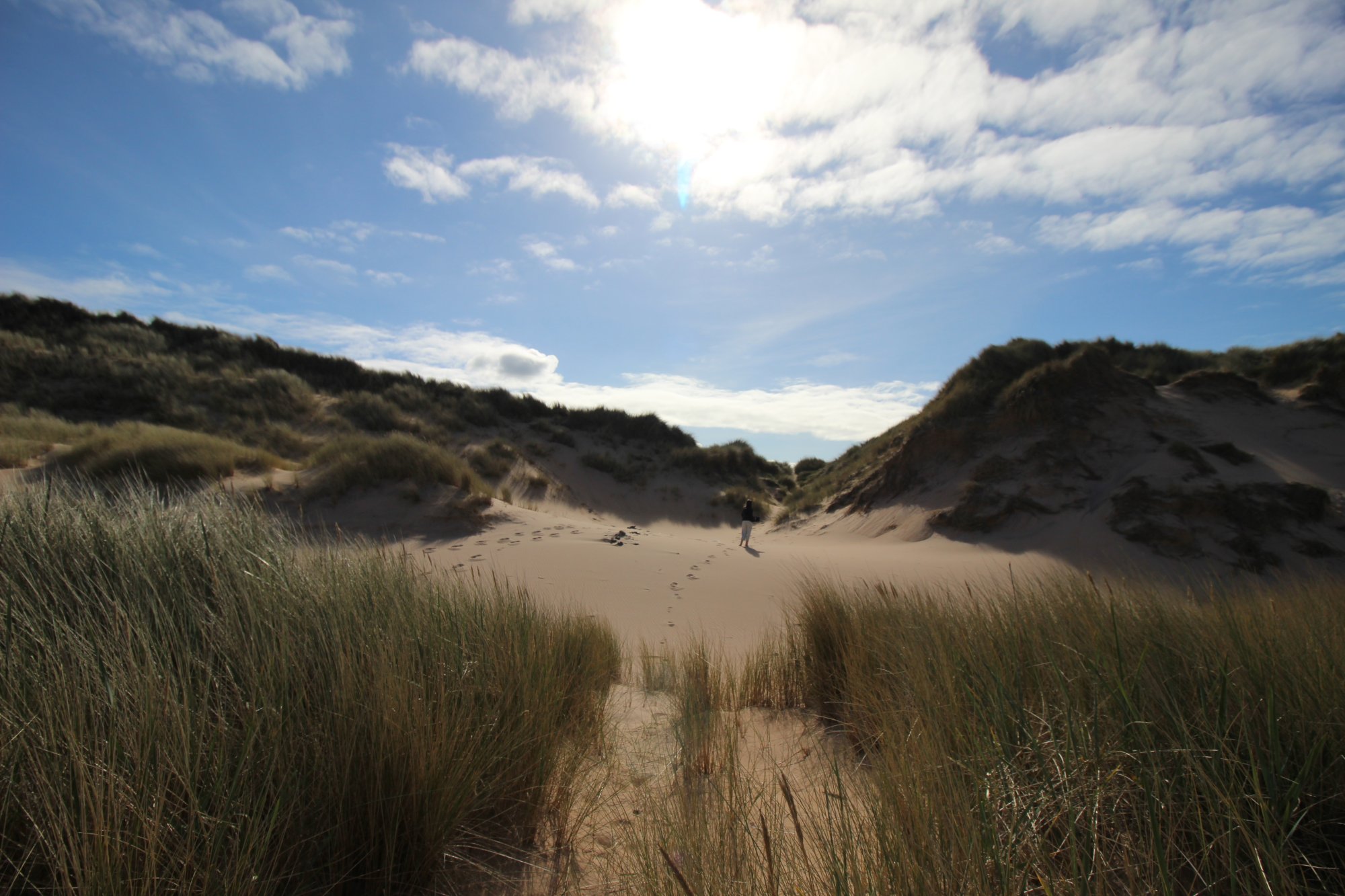
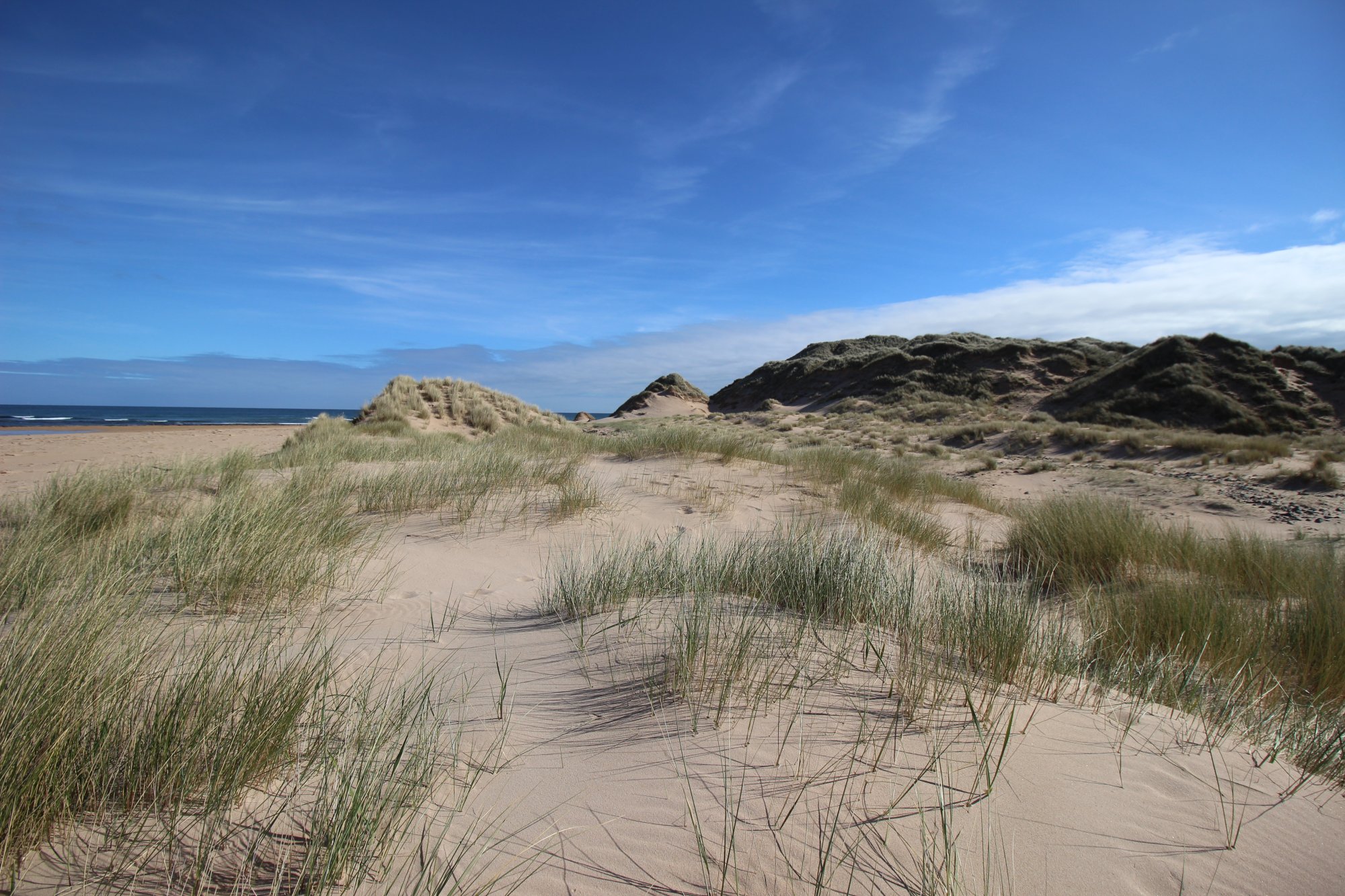
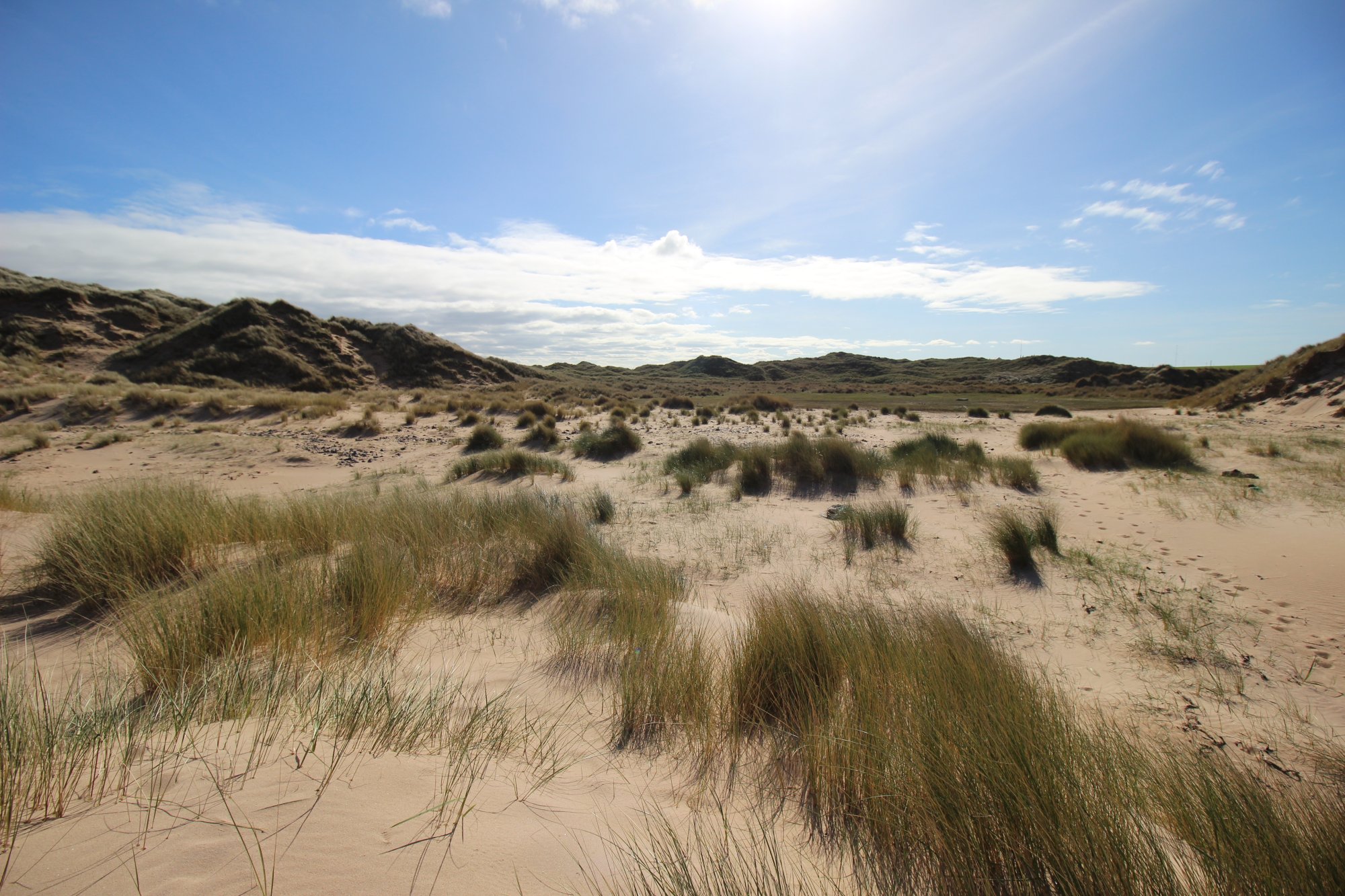
- Towering Dune Seas: Framing both beaches are some of the highest, most dramatic sand dunes in the UK, rising like golden hills above the tide line. Cresting these marram-anchored ridges unveils sweeping panoramic vistas across the North Sea, where rolling dunes meet endless horizons under ever-changing Scottish skies.
- Northern Light and Atmospheric Shadows: The vast eastern exposure makes Rattray Head an extraordinary realm for visual contemplation. Golden hour light illuminates the wind-rippled sands, while low-slung northern clouds and offshore sea fogs (haar) frequently blanket the headland, creating an ethereal, moody atmosphere.
The Dual Shorelines: Rattray South Beach and Rattray North Beach
The central point of Rattray Head splits the coastline into two magnificent, contrasting sandy strands:
- Rattray South Beach (Lighthouse Shore): Sweeping south toward Peterhead, this strand directly faces the iconic lighthouse. The beach is defined by smooth, golden sands that stretch for miles, backed by the sprawling wetlands of the Loch Strathbeg RSPB nature reserve. The quiet sands here are a prime location for watching grey seals playing in the surf and observing thousands of wintering pink-footed geese filling the skies above the dunes.
- Rattray North Beach (The St Combs Strand & Loch Strathbeg): Curving northwest toward the historic fishing village of St Combs, the northern beach is a wilder, even more secluded stretch of coast. Defined by broad intertidal sand flats, rich shell beds, and massive blowouts in the dune field, this strand offers absolute solitude where the rhythmic sound of crashing waves and crying gulls dominates the sensory landscape.
The Living Coast: Avian Sanctuaries, Marine Life, and Dune Ecology
Beyond its dramatic visual presence, both beaches at Rattray Head harbor a thriving coastal ecosystem:
- Marine Observers and Seal Haul-Outs: The rich marine waters around Rattray Briggs reef attract abundant sea life. Grey seals are a constant presence along both shores, often hauling out onto the sandbanks or surfacing near the lighthouse causeway. Offshore, sharp-eyed visitors can spot dolphins and minke whales traveling along the Buchan coast.
- Avian Haven of Strathbeg: Positioned adjacent to Loch Strathbeg—Britain's largest coastal lagoon—the skies and shores of Rattray Head are alive with birdlife. Terns, oystercatchers, and ringed plovers nest along the upper beach margins, while vast flocks of waders and wildfowl feed in the rich intertidal zone.
- Dune Biodiversity and Marram Grasslands: The stabilizing marram grass (Ammophila arenaria) holds the massive dune fields together, creating a sheltered microclimate where coastal wildflowers, bumblebees, and rare butterflies thrive during gentle summer days.
The Atmospheric Experience: Exploration, Solitude, and Visitor Care
Visiting Rattray Head is a peaceful, restorative escape into an untamed maritime landscape:
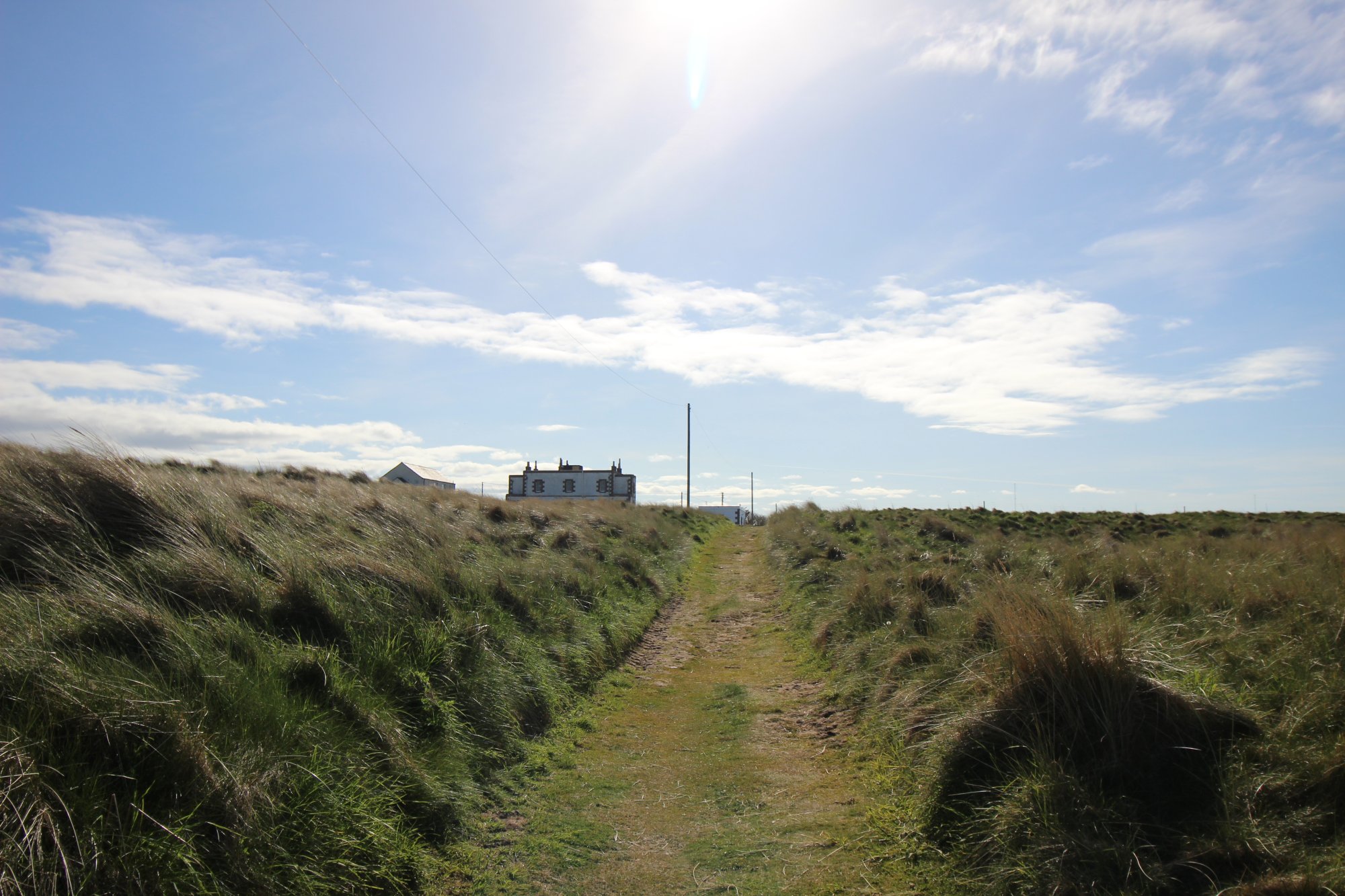
- Wandering the Strand and Dune Trails: Access to the headland involves navigating single-track farm tracks leading to a quiet parking area near the historic foghorn and lighthouse cottages. From here, sandy tracks wind through the dunes, opening up directly onto the expansive dual beaches.
- Sensory Immersion and Quietude: Free from commercial development, Rattray Head offers a pure sensory encounter with nature—the salty tang of the North Sea breeze, the crunch of shell-sand underfoot, and the therapeutic rhythm of rolling ocean waves.
- Protecting a Sensitive Haven: To preserve the delicate balance of the dunes and protect ground-nesting birds and seals, visitors are encouraged to stick to established paths through the dunes, keep dogs under close control, and observe Leave No Trace principles across both beaches.