


Time and the Thatch: Stepping Inside the Skye Museum of Island Life
Located at Kilmuir on the exposed, dramatic northern coastline of the Trotternish Peninsula, the Skye Museum of Island Life offers one of the most authentic historical experiences in the Inner Hebrides. Opened in 1965, this unique open-air museum was established to preserve a disappearing way of life, stepping far away from traditional museum display cases. Instead, it presents a fully realized, immersive township of late 19th-century croft houses. Standing on the breezy hillside with the waves of the Minch rolling below, visitors are transported directly into the rugged, resilient world of the Highland crofter, providing a vital cultural anchor on an island known for its sweeping natural landmarks.
The Architecture of Resilience: Traditional Croft Houses
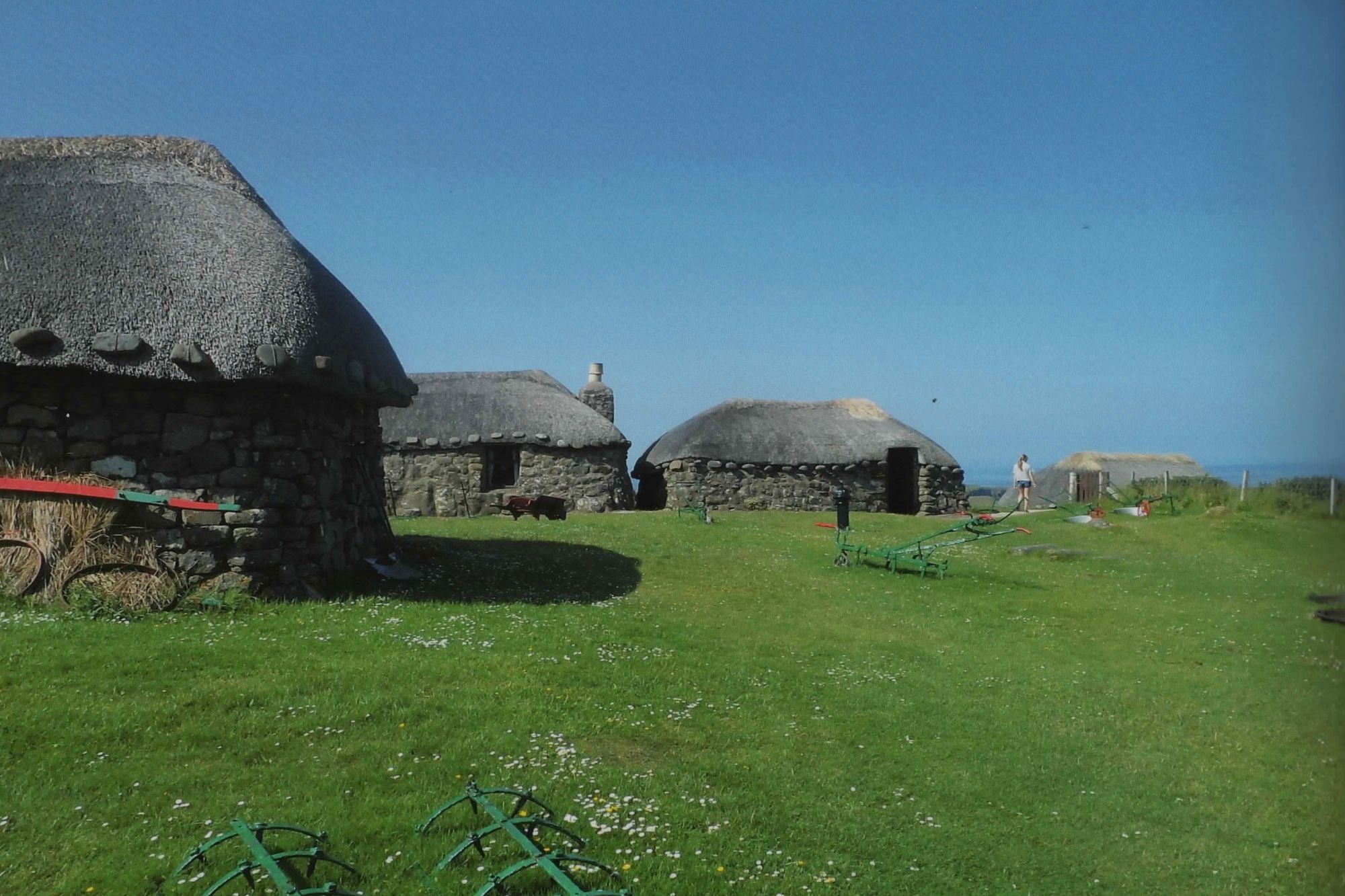
The centerpiece of the museum is its collection of perfectly preserved, low-slung blackhouses and cottages. These structures were built with immense practical ingenuity to withstand the brutal Atlantic gales that regularly sweep across the peninsula:
- Drystone Engineering: The thick walls were constructed using double-layered local stones packed with earth, featuring rounded corners to deflect the high winds rather than trap them.
- Oat-Straw Thatching: The roofs are topped with traditional oat-straw thatch, held down by weighted ropes or wire netting secured by heavy stones to prevent the structures from lifting during winter storms.
- The Hearth: Inside the oldest cottages, the floors are hard-packed clay, and the rooms are dominated by the central peat fire, which burned continuously to provide warmth, dry out damp clothes, and cook daily meals.
The air inside the dark interiors carries the heavy, nostalgic scent of burning peat, instantly evoking the daily domestic realities of a bygone era. Each specialized building within the township serves a distinct community purpose, including the Weaver’s Cottage, the Smithy, the Crofter’s House, and a fascinating old barn filled with vintage agricultural tools and horse-drawn machinery.
A Window Into Crofting Culture and Hardship
The museum does not romanticize the past; it provides an honest look into the immense hardships faced by island communities following the devastating Highland Clearances. The exhibits detail the intricate social fabric of the Gaelic-speaking population, tracking how families managed small patches of challenging land (crofts) while balancing cattle farming, hand-weaving, and harvesting seaweed for fertilizer.
The old schoolhouse on site is particularly poignant, displaying original lesson books and historic photographs that reveal the community's deep commitment to education and language preservation despite systemic poverty. For anyone exploring the island, this site adds vital human context to the empty, haunting ruins scattered throughout the wider Skye landscape.
Practical Visitor Information and Logistics
Opening Times and Seasonality: The museum operates on a strictly seasonal schedule, welcoming visitors from Easter until mid-October each year, from Monday to Saturday. It remains closed during the harsh winter months to allow for essential conservation work, including the highly skilled, labor-intensive process of re-thatching the roofs.
Ticketing and Access: Admission fees are exceptionally modest, with the proceeds going directly toward the independent upkeep and preservation of the historic buildings. The site features a well-stocked gift shop and a small parking area that can accommodate cars and campervans navigating the single-track roads of the northern loop.
The Flora MacDonald Connection: The museum shares its boundary hill with Kilmuir Cemetery. Just a short walk up the grassy slope stands the massive Celtic cross monument marking the final resting place of Flora MacDonald, the famous Jacobite heroine who famously helped Bonnie Prince Charlie escape to the Isle of Skye after the defeat at the Battle of Culloden in 1746.
Conclusion: The Soul of the Mist Isle
The Skye Museum of Island Life is far more than a collection of historic stone and straw; it is a monument to the endurance, spirit, and deep-rooted culture of the Hebridean people. By showcasing how islanders lived, worked, and thrived in the face of political turmoil and a fierce climate, this small, wind-beaten township ensures that the true soul of Skye is never overshadowed by its mountains.