

Into the Underworld: Exploring the Primordial Depths of MacKinnon’s Cave
While Fingal’s Cave on the nearby island of Staffa may win the prize for worldwide fame and geometric symmetry, MacKinnon’s Cave on the wild west coast of the Isle of Mull wins for sheer, overwhelming scale. Reaching a staggering depth of over 150 meters, it is officially the deepest sea cave in the Inner Hebrides and stands as one of the most atmospheric, awe-inspiring locations in all of Scotland. Tucked away beneath the towering, precarious shadows of the Gribun cliffs, MacKinnon’s Cave is not for the faint of heart. It is a subterranean cathedral of darkness, echoing tide pools, and ancient folklore, carved relentlessly by the Atlantic Ocean into the dark basalt and limestone of the Mull coastline. For those willing to navigate the punishing, boulder-strewn approach, it offers a sense of raw, primordial wonder that few other places on earth can match.
The Legend of the Lost Piper
No descent into MacKinnon’s Cave is complete without understanding the haunting Highland legend that gives the cavern its eerie reputation. Local folklore tells of a brave MacKinnon piper who, in a classic display of clan bravado, marched into the cave to prove it was a secret, uncharted passage cutting entirely through the island. He walked confidently into the absolute darkness, playing his bagpipes at full volume so that those tracking him on the surface could follow his progress by listening to the vibrations in the rock.
As the music grew faint deep underground, it was suddenly replaced by the terrifying sounds of a violent struggle. Legend says the piper encountered a malevolent "female monster" or a powerful banshee deep within the cavern who demanded a steep, bloody price for passage. While the piper's dog eventually sprinted out of the cave entrance—utterly terrified and mysteriously stripped of all its hair—the piper himself was never seen again. To this day, locals claim that on stormy winter nights, the distant, muffled skirl of phantom bagpipes can still be felt vibrating through the stone beneath the Gribun cliffs.
A Geological Giant and the Abbot’s Table
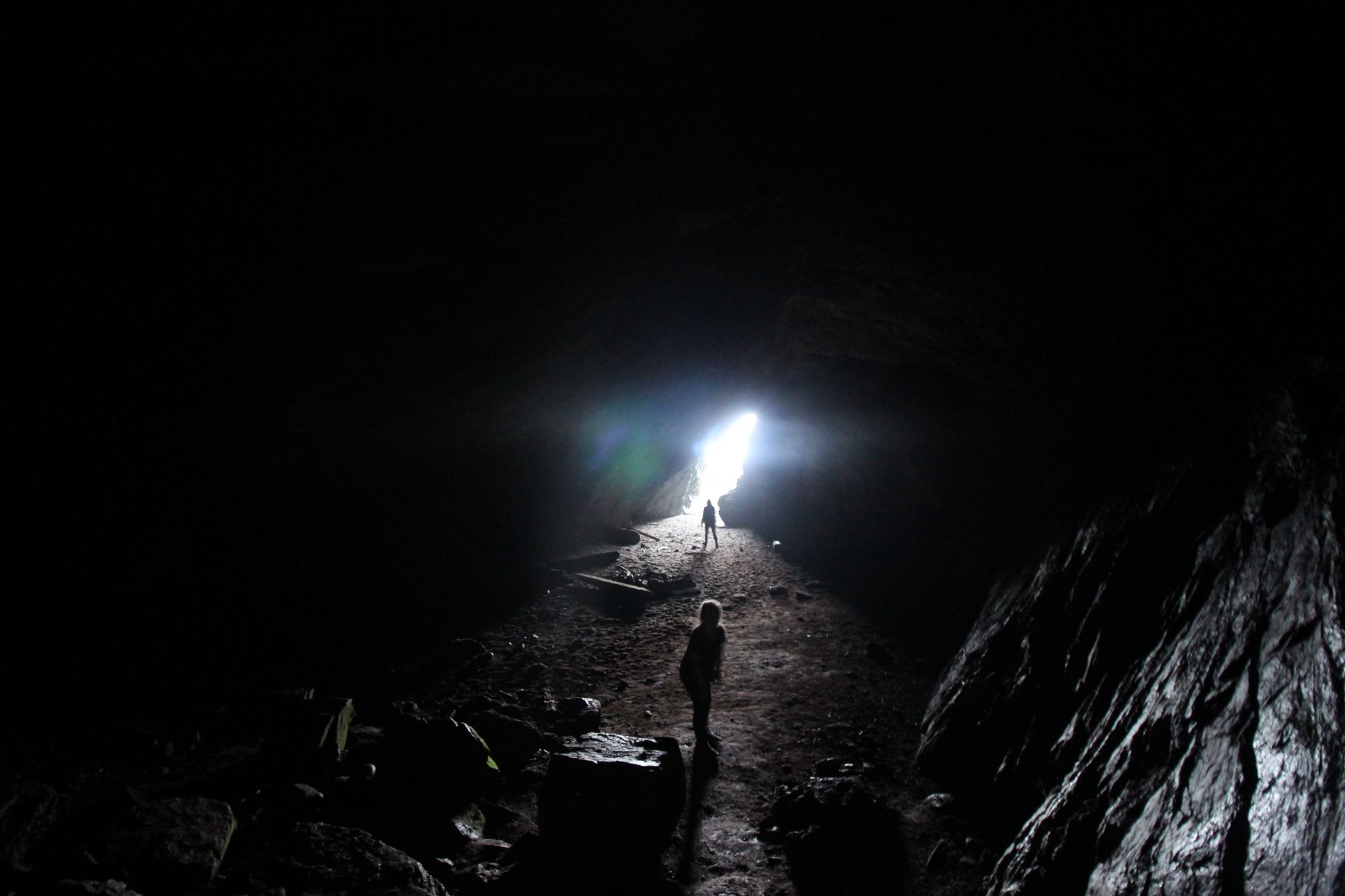
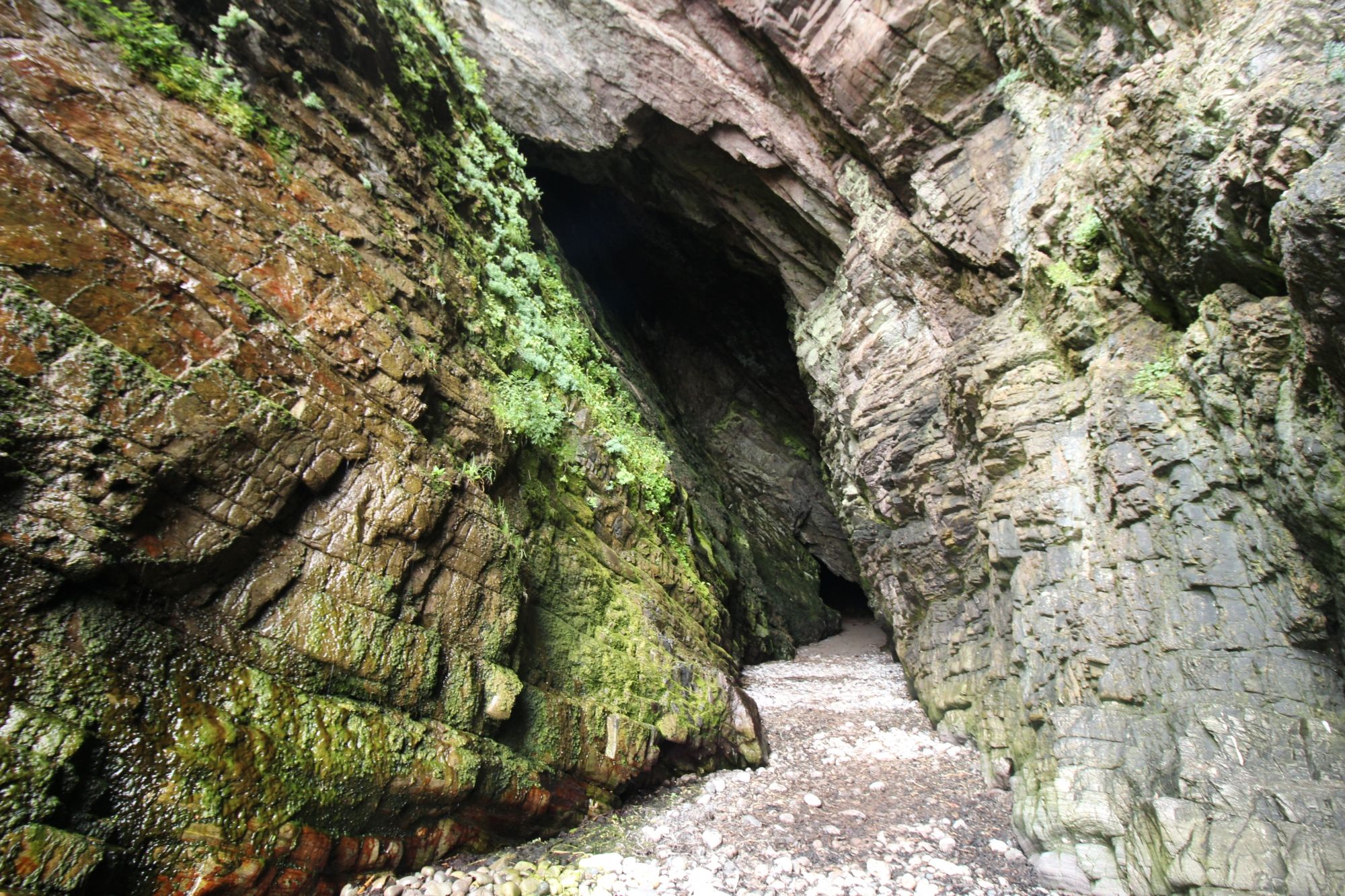
The staggering dimensions of MacKinnon’s Cave are impossible to fully comprehend until you are standing directly within its colossal mouth. The entrance presents itself as a massive, jagged archway that feels like a literal gateway to the underworld. As you step inside and venture past the reach of daylight, the ceiling soars to a height of nearly 15 meters in places, creating a vast, echoing chamber that swallows the sound of the ocean.
Geologically, the cave was formed along a major fault line where millions of years of wave action have violently exploited a natural weakness in the basalt rock layers. The floor inside is a treacherous, ever-shifting terrain of damp, seaweed-covered boulders, slick mud, and hidden tide pools. Deep in the pitch-black recesses of the cave lies the "Abbot’s Table"—a large, remarkably flat-topped rock. In the 15th century, during times of intense religious persecution, the Abbots of Iona reportedly used this hidden stone as a secret altar to celebrate Mass while hiding from forces hunting them. This history adds a profound, solemn layer of human history to the deep darkness.
The Hike: The Gribun Boulder Scramble
Reaching this geological marvel is an adventure in itself. There are no manicured paths, safety handrails, or visitor centres; it is a raw coastal trek that demands a high level of physical fitness, sturdy footwear, and a steady foot.
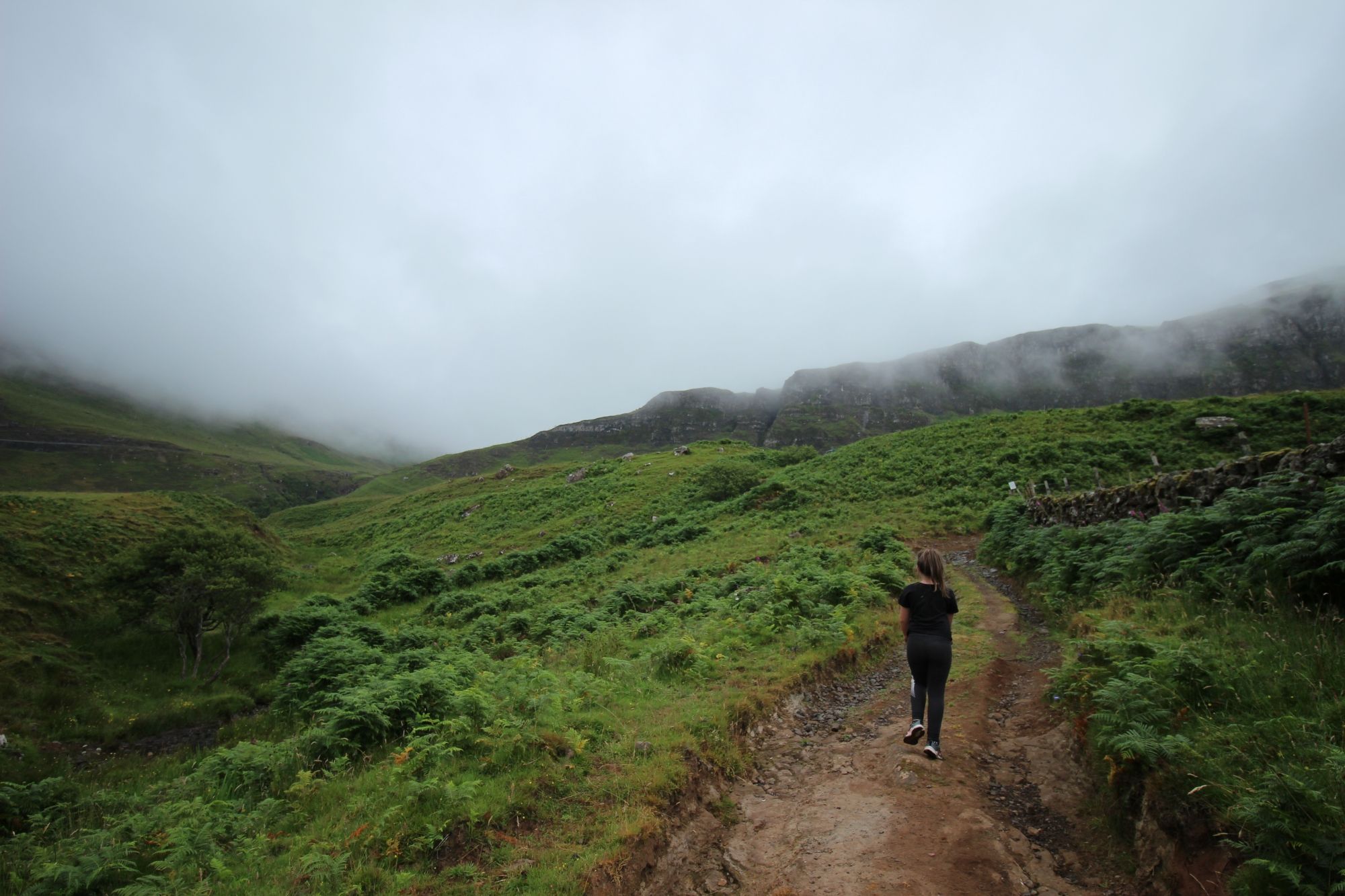
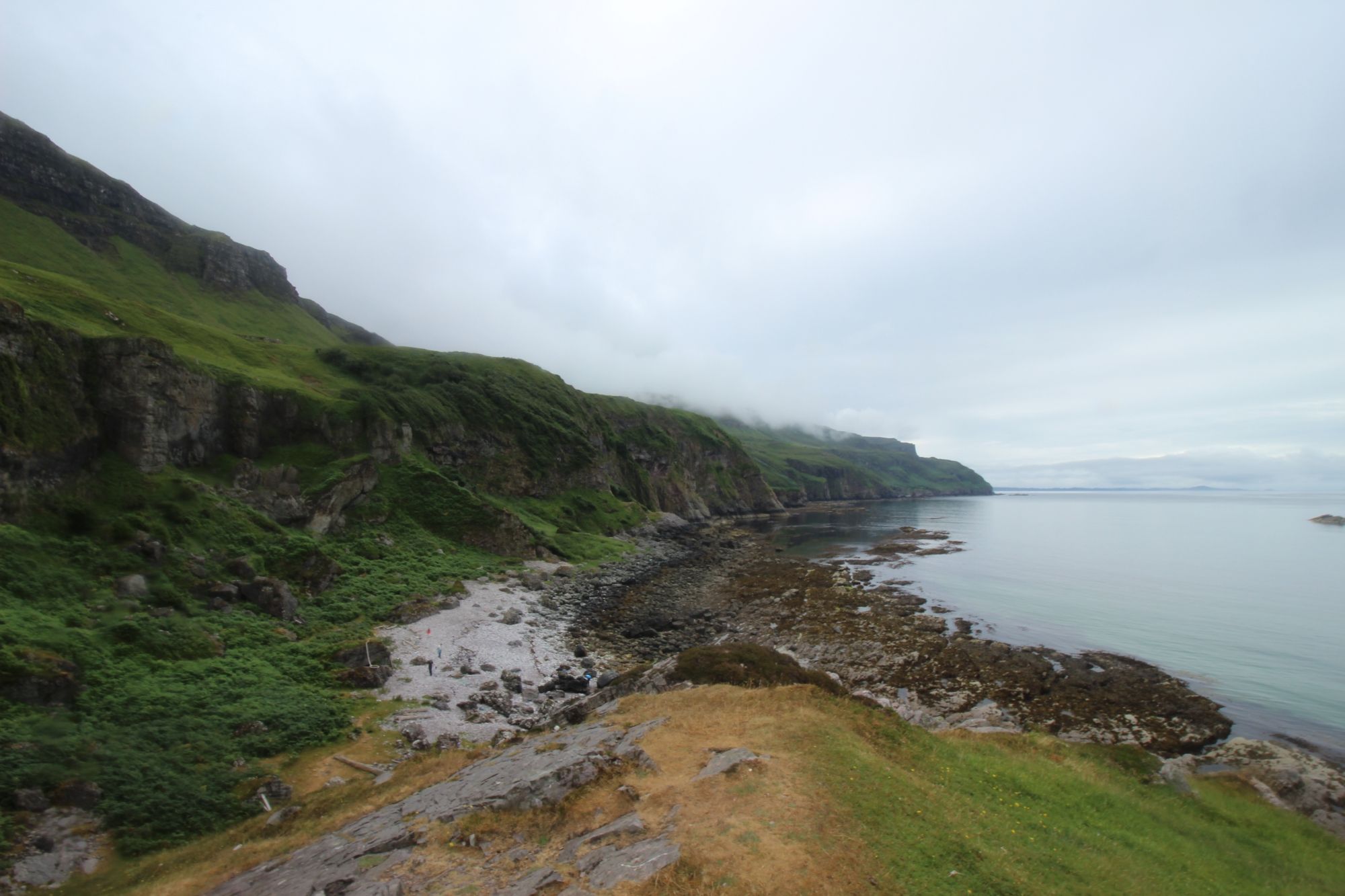
- The Approach: The walk begins from a small parking pull-off near Balmeanach on the scenic B8035 road. From there, you descend through steep, often boggy grassy fields toward the shoreline, following a faint, unmaintained trail.
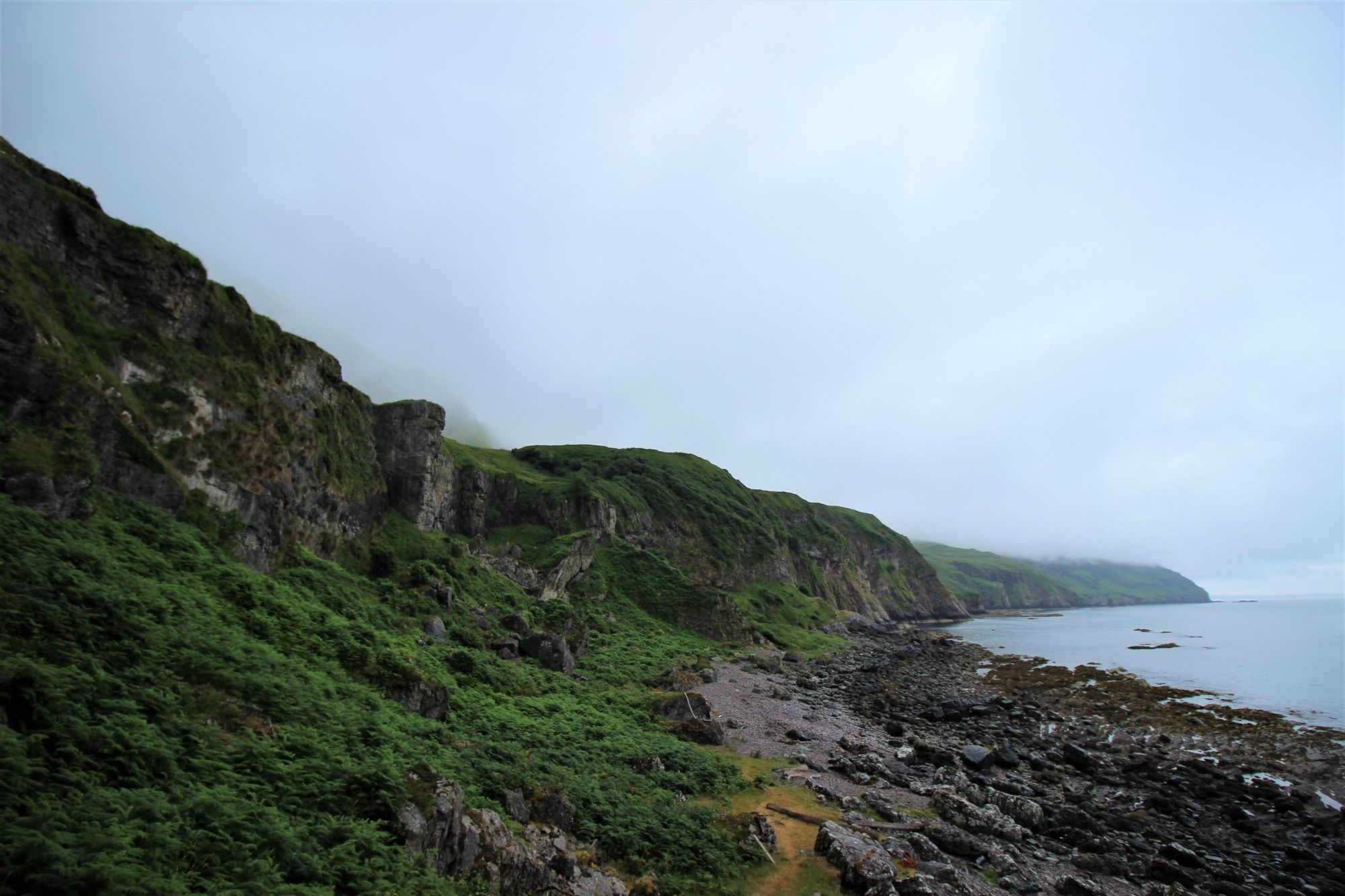
- The Shoreline Scramble: Once you reach the coast, the real physical challenge begins. You must navigate several hundred meters of massive, incredibly slippery coastal boulders and deep rock pools. Recent coastal erosion around Gribun has made this section even more rugged, demanding a slow, calculated scramble where every single step must be chosen with care.
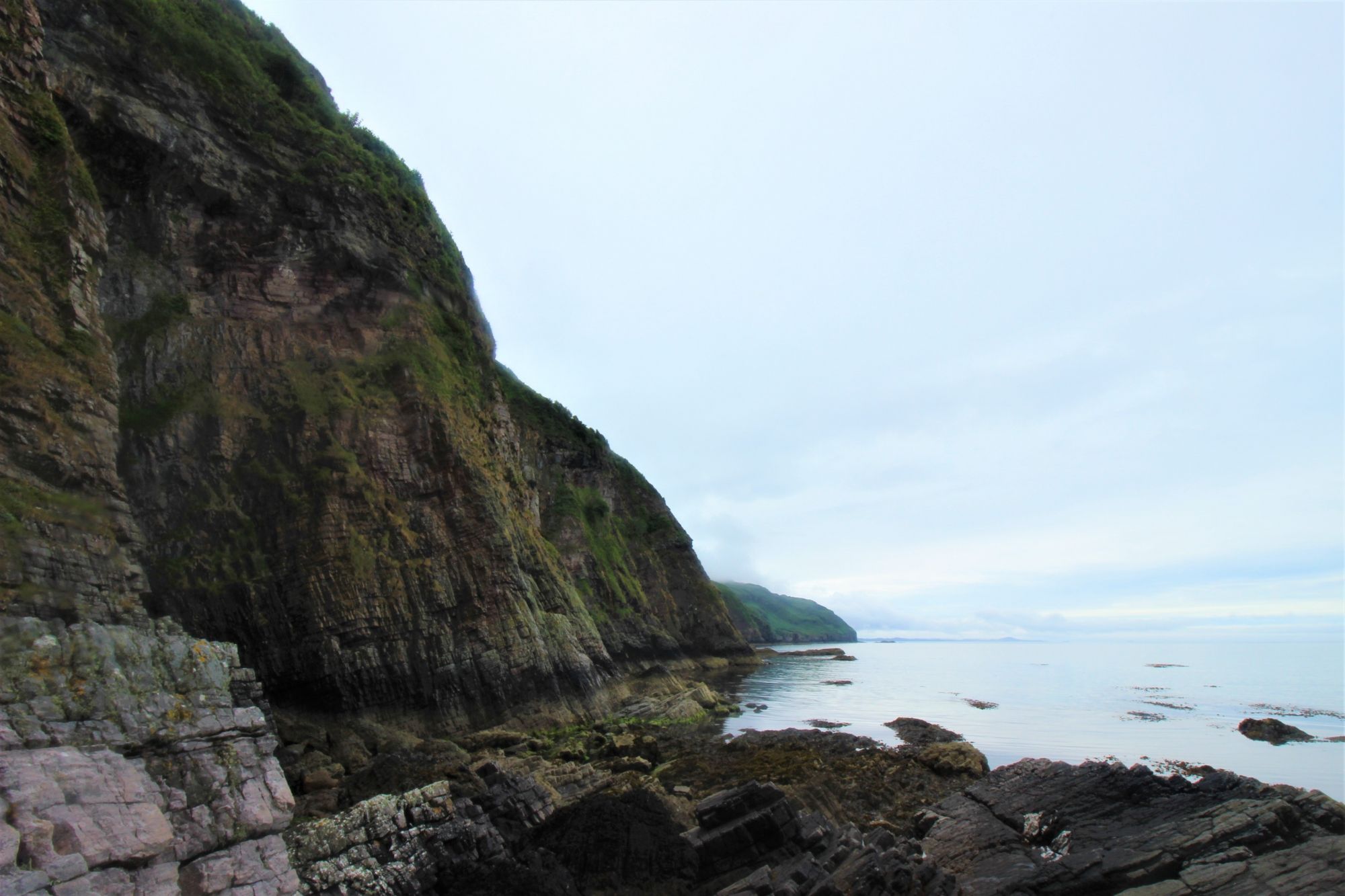
- The Reveal: The cave remains completely hidden from view until you are almost right upon it. You must round a final, jagged rocky headland before the massive black maw of the cave suddenly reveals itself, often framed by the explosive, white spray of crashing Atlantic waves.
Crucial Safety Guidelines for the Season
The Tide is Absolute: Because MacKinnon’s Cave is an active sea cave, it is one of the most dangerous attractions on Mull if approached without meticulous planning. The cave is completely cut off and submerged at high tide. You must check the local tide tables for Ulva Ferry or Iona before setting out. Aim to arrive at the cave entrance at least one hour before low tide to give yourself ample time to explore and exit safely. The rising tide fills the cavern with terrifying speed, and getting stranded here can be fatal.
High-Powered Lighting: The cave plunges into absolute, ink-black darkness past the first 20 meters. A standard mobile phone torch is entirely useless and unsafe. You must carry a powerful, waterproof headlamp or a dedicated heavy-duty flashlight per person. To safely spot the Abbot’s Table at the absolute back of the cavern, you will need a strong beam capable of cutting through the heavy, moisture-laden air.
Rockfall Hazard: The towering Gribun cliffs are notoriously unstable and prone to sudden movement. Following periods of heavy Scottish rain, there is a significantly heightened risk of rockfall both along the shoreline approach and directly around the cave entrance. Wearing a lightweight climbing helmet is a highly recommended precaution for anyone planning to explore the deepest recesses of the cave.
Why MacKinnon’s Cave Stays with You
There is an undeniable, heavy "weight" to the damp air inside MacKinnon’s Cave. It feels ancient, completely indifferent to humanity, and deeply mysterious. Unlike other commercialized caves across Europe, there are no artificial spotlights, no concrete walkways, and no guided boat tours. It is just you, the beam of your torch, and the deep, rhythmic sound of the Atlantic Ocean breathing at the cave mouth. Standing by the historic Abbot’s Table, buried beneath 150 meters of solid Hebridean rock, you feel a humbling, unforgettable connection to the pipers, the hiding monks, and the ancient, tectonic forces that shaped the Scottish wilderness.