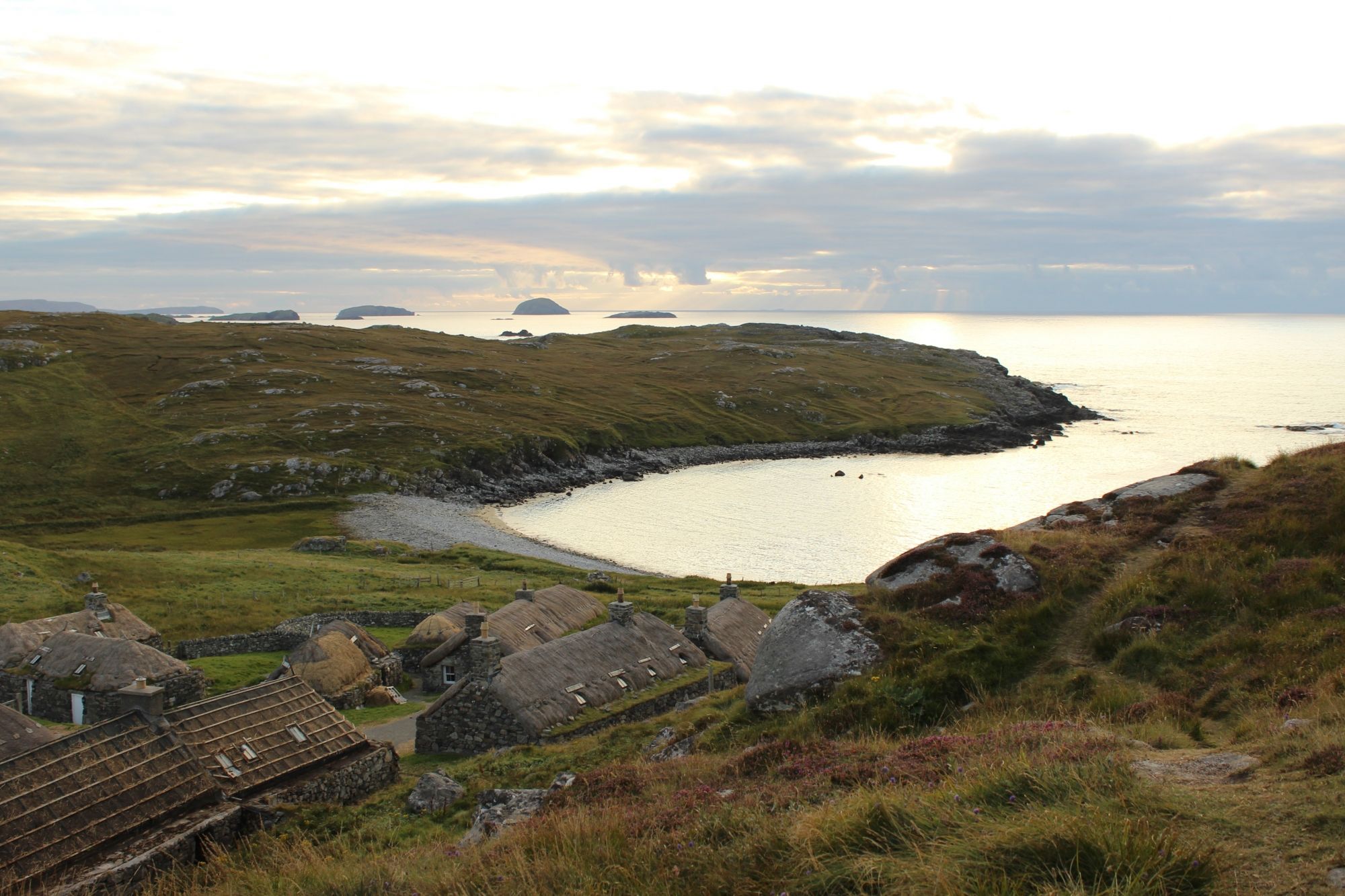


Gearrannan Blackhouse Village: A Living Testament to Hebridean Resilience
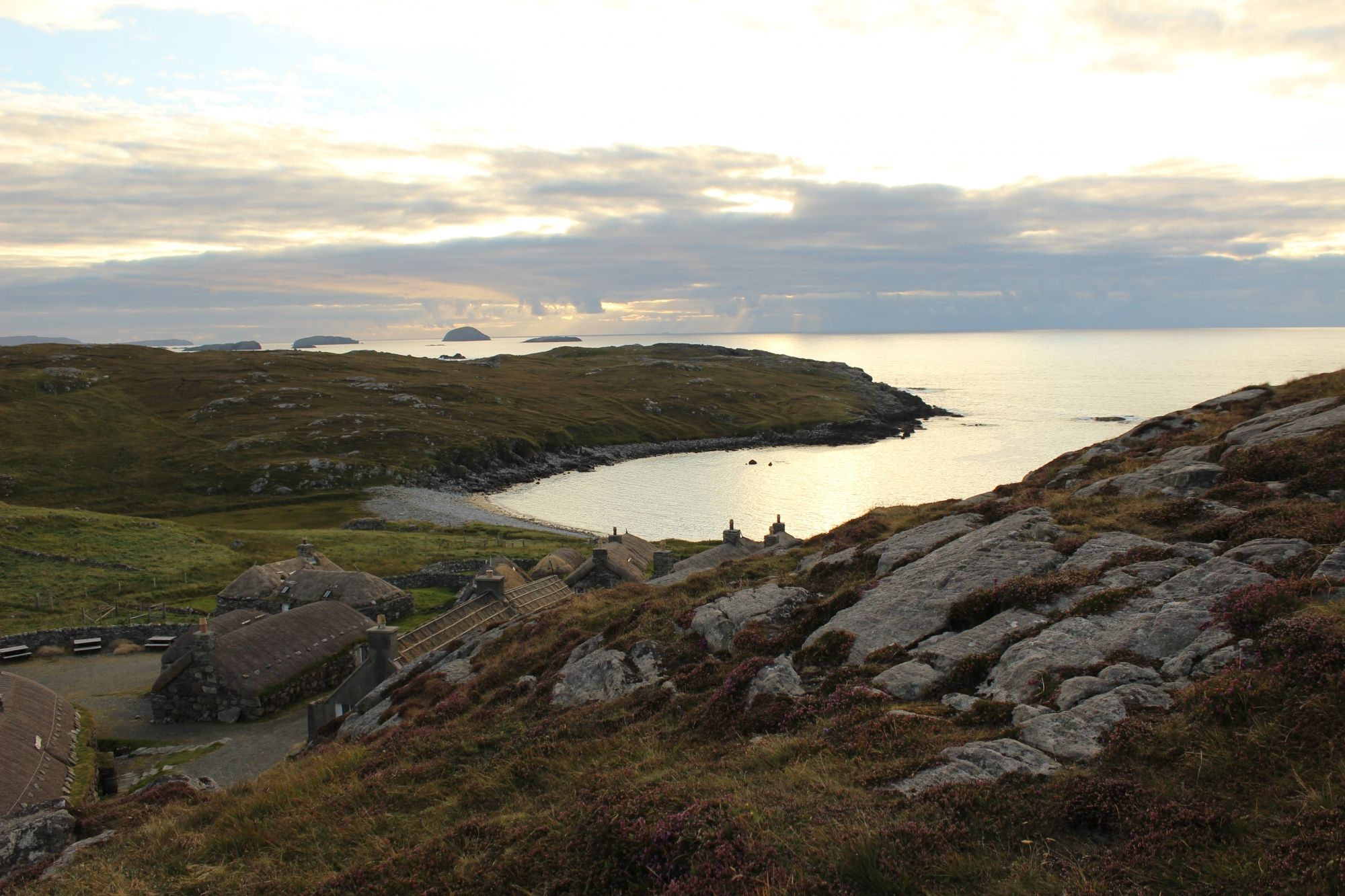
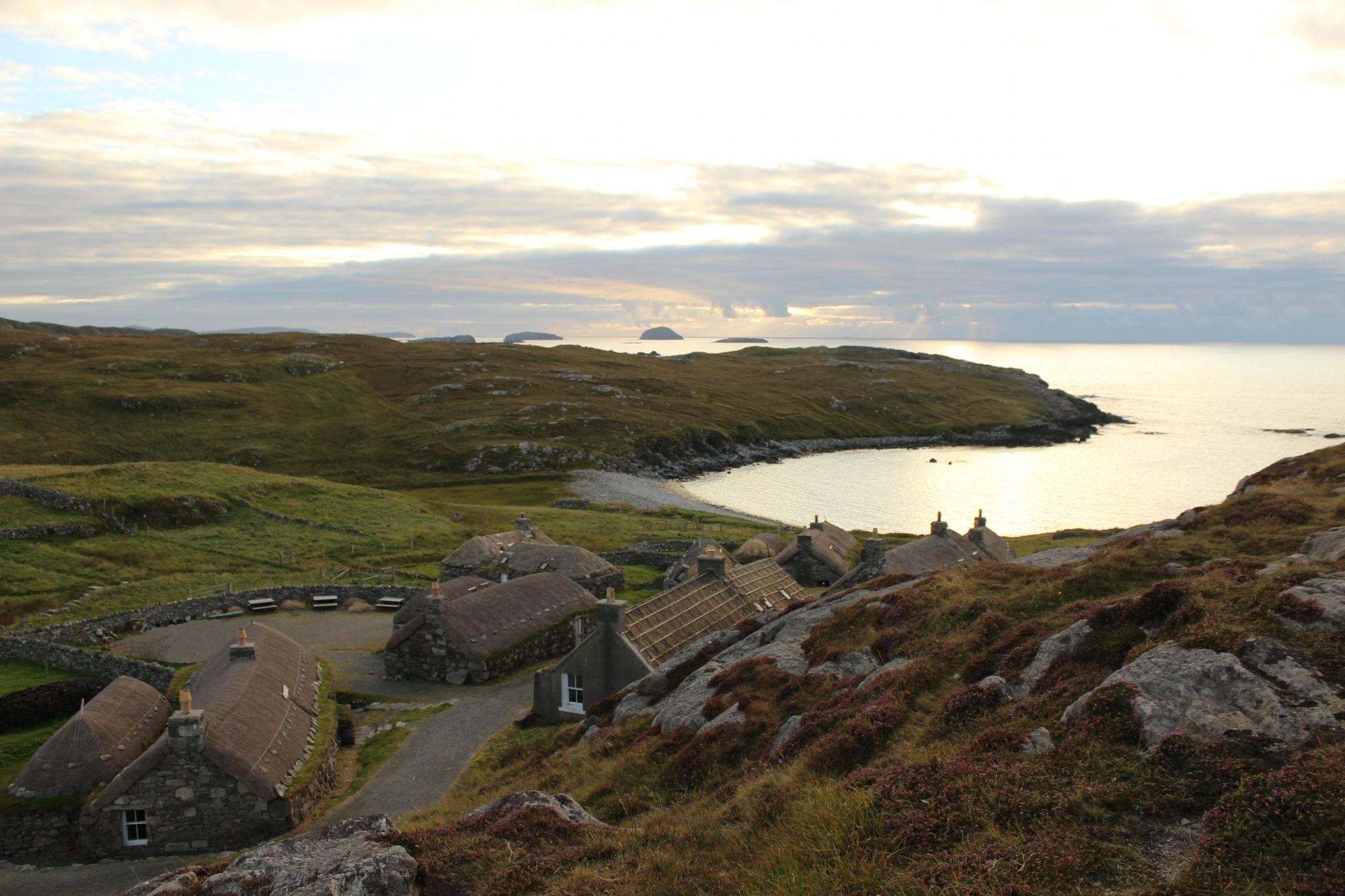
Perched on a rugged edge of the Atlantic coast on the west side of the Isle of Lewis, the Gearrannan Blackhouse Village is one of the most evocative historical sites in Scotland. While many ruins across the islands tell a story of abandonment, Gearrannan is a story of survival and transformation. This cluster of nine restored traditional dwellings offers a rare, immersive glimpse into a way of life that remained largely unchanged for centuries.
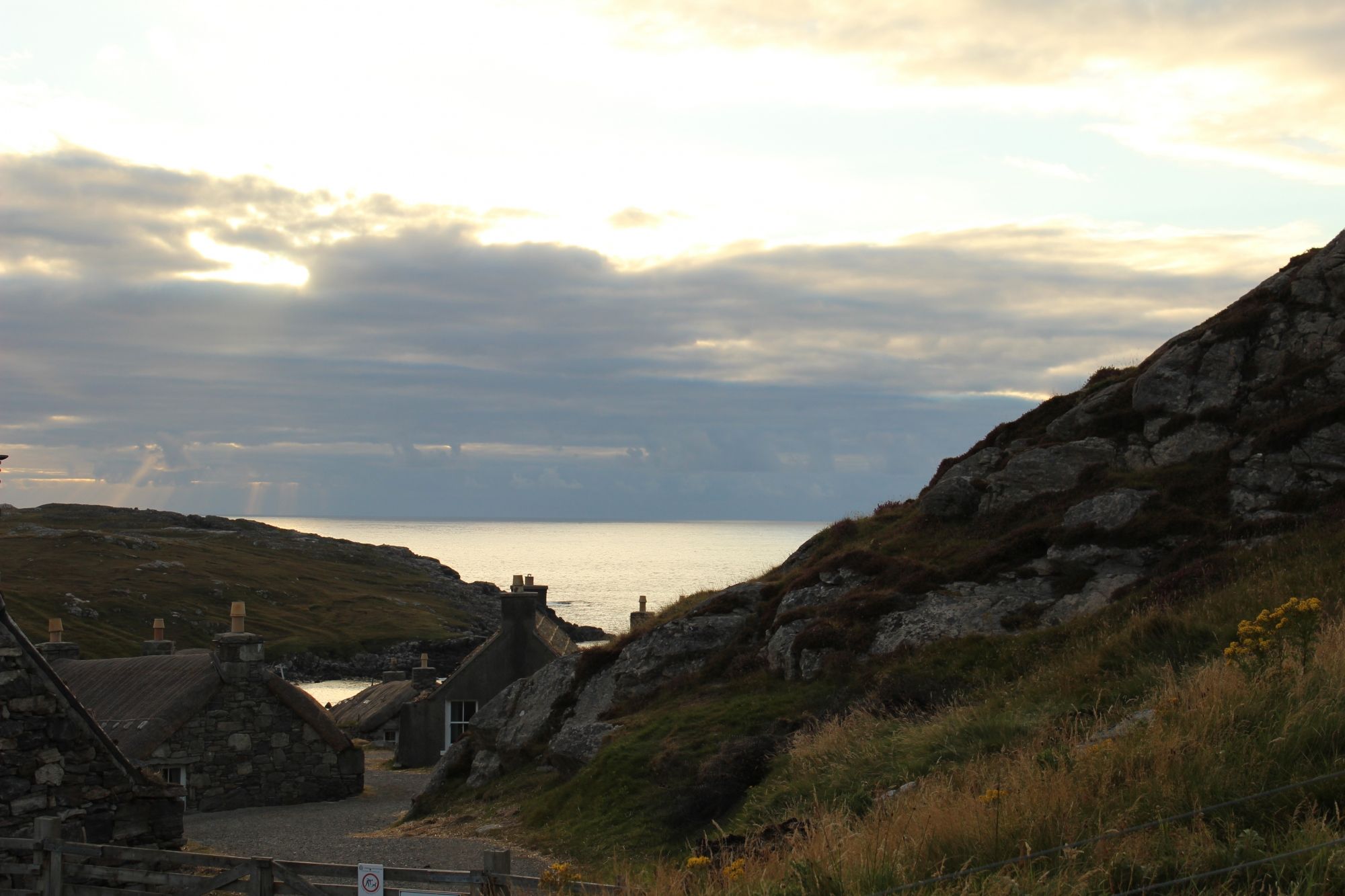
Walking into the village feels like stepping through a fold in time. Surrounded by steep, green hills and overlooking the crashing waves of a secluded bay, the blackhouses sit low to the ground, their thick stone walls and rounded thatch roofs designed to withstand the fierce Atlantic gales that define life in the Outer Hebrides.
What is a "Blackhouse"?
The term "blackhouse" (taigh-dubh) emerged in the late 19th century to distinguish these traditional dwellings from the newer, "white houses" that were being built with mortared stone and chimneys.
The architecture of a blackhouse is a marvel of local engineering. Built with double-skinned drystone walls packed with earth or peat for insulation, they feature no gables; instead, the roofs are rounded to allow the wind to pass over them without catching the edges. Traditionally, these homes had no chimneys. A peat fire burned constantly in a central hearth, and the smoke filtered through the thatch roof, killing insects and curing the fish or meat hanging from the rafters. While this made the interior "black" with soot, it provided essential warmth and preserved the structural integrity of the roof.
The Story of Gearrannan: From Croft to Museum
Unlike many villages cleared during the Highland Clearances, Gearrannan remained a living, working crofting community well into the 20th century. Remarkably, the last elderly residents did not move out of these traditional homes until 1974.
After the residents left, the village began to decay, but a local trust—the Urras nan Geàrrannan—was formed to save the site. Today, the village has been painstakingly restored using traditional methods. Rather than becoming a static museum, Gearrannan is a multi-purpose site: some houses serve as museum displays, while others have been converted into unique self-catering holiday cottages and even a youth hostel. This allows visitors to not just look at history, but to sleep within the same walls that sheltered generations of Hebridean families.
The Loom and the Peat: Experience the Culture
Inside the main museum blackhouse, you can often see a demonstration of a Harris Tweed loom. The rhythm of the loom is the heartbeat of Lewis, and seeing the intricate patterns emerge from the wool provides a deep appreciation for the island's most famous export.
The scent of the village is also unforgettable. The rich, earthy aroma of burning peat lingers in the air, a smell that for many Scots is the ultimate symbol of home and hospitality. You can explore the living quarters, seeing the box beds and the "byre" end of the house where cattle were traditionally kept during the winter months to help provide warmth for the human inhabitants.
Filming Location and "The Blackhouse" Novel
Fans of Scottish literature and film will find Gearrannan familiar. The village was a primary filming location for the 1990s Gaelic TV drama Machair, and it served as the atmospheric backdrop for the film adaptation of Peter May’s international bestseller, The Blackhouse. The haunting beauty of the village perfectly captures the "noir" atmosphere of May’s Lewis Trilogy, making it a place of pilgrimage for readers from around the world.
Visiting in 2026: Practical Information
Access: The village is reached via a narrow road through the village of Carloway. As of 2026, the road is well-signed, but be mindful of local traffic and sheep on the road.
Facilities: There is a dedicated car park and a visitor center that includes a small shop and a café. The café is highly recommended for its local home-baking and views over the bay.
Opening Hours: The museum usually operates from April to October. However, the village itself is always open to walk through, even when the museum and café are closed. If you visit in the "off-season," you'll often have the entire haunting landscape to yourself.
The Coastal Path: For those who enjoy hiking, there is a spectacular coastal path that leads from Gearrannan to Dalmore Beach. It offers some of the best cliff-top views on the island and takes about an hour each way.
Why Gearrannan is a "Must-Visit"
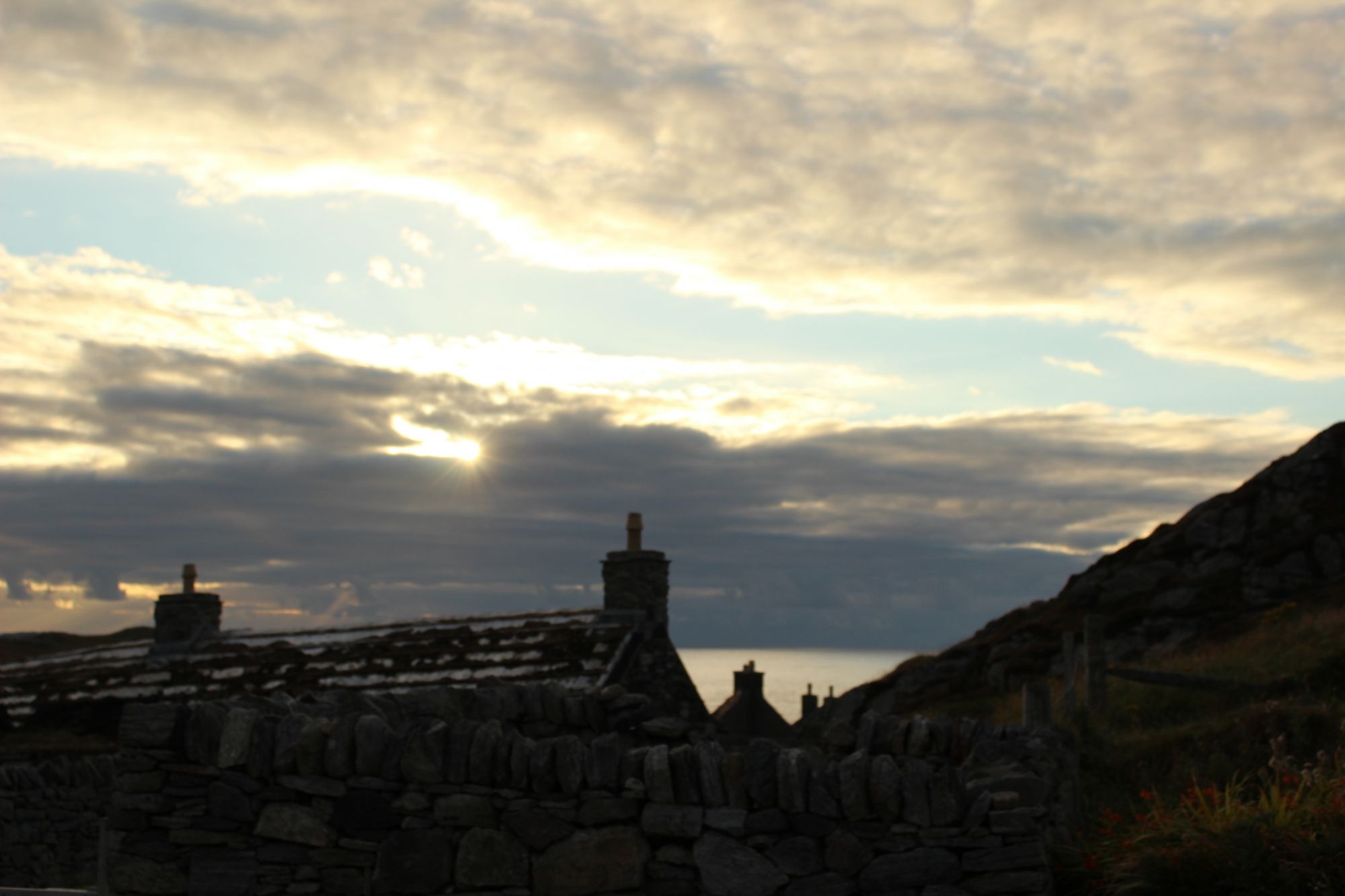
Gearrannan is more than a collection of old buildings; it is a testament to the resilience of the Hebridean people. It bridges the gap between the ancient Neolithic world of Callanish and the modern Lewis of today. Standing among the thatched roofs as the sun sets over the Atlantic, you get a profound sense of the "long memory" of the islands. For anyone looking to understand the true character of the Outer Hebrides, a few hours spent in the shadows of the blackhouses is an absolute necessity.