The Devil's Pulpit: Navigating Finnich Glen's Blood-Red Waters
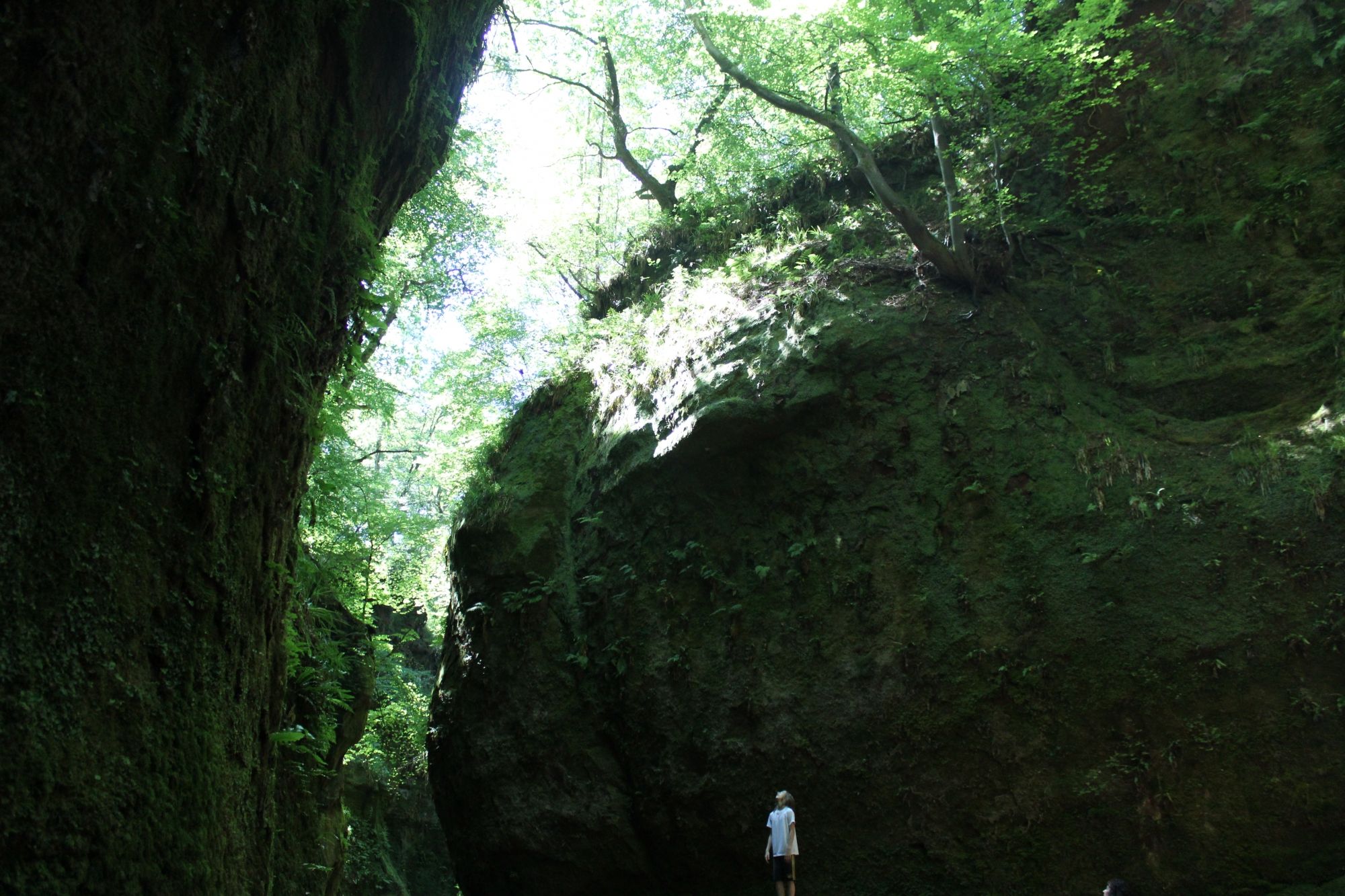
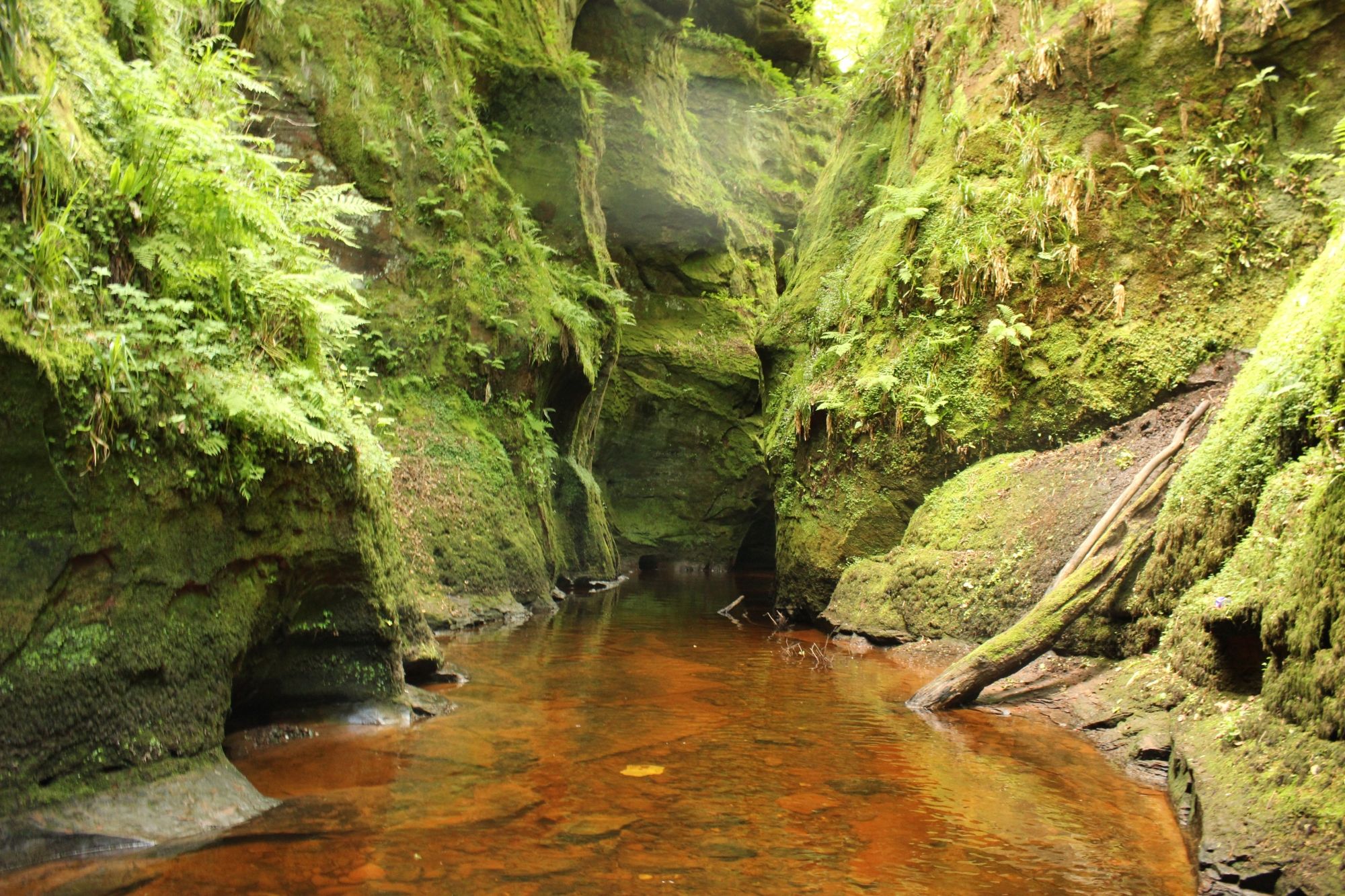
Tucked away beneath a nondescript field in Stirlingshire, just 30 minutes north of Glasgow, lies one of Scotland's most otherworldly natural wonders: Finnich Glen. While its official name is rooted in local geography, it is known globally by the more sinister moniker, The Devil's Pulpit. This 70-foot-deep gorge is a masterpiece of natural erosion, where the Carnock Burn has sliced through red sandstone to create a narrow, moss-draped canyon. The combination of vibrant green walls and water that appears to run blood-red creates an atmosphere so fantastical that it feels less like a Scottish glen and more like a portal into a fairy tale—or a gothic horror.
The Legend of the Pulpit and the Liar's Spring
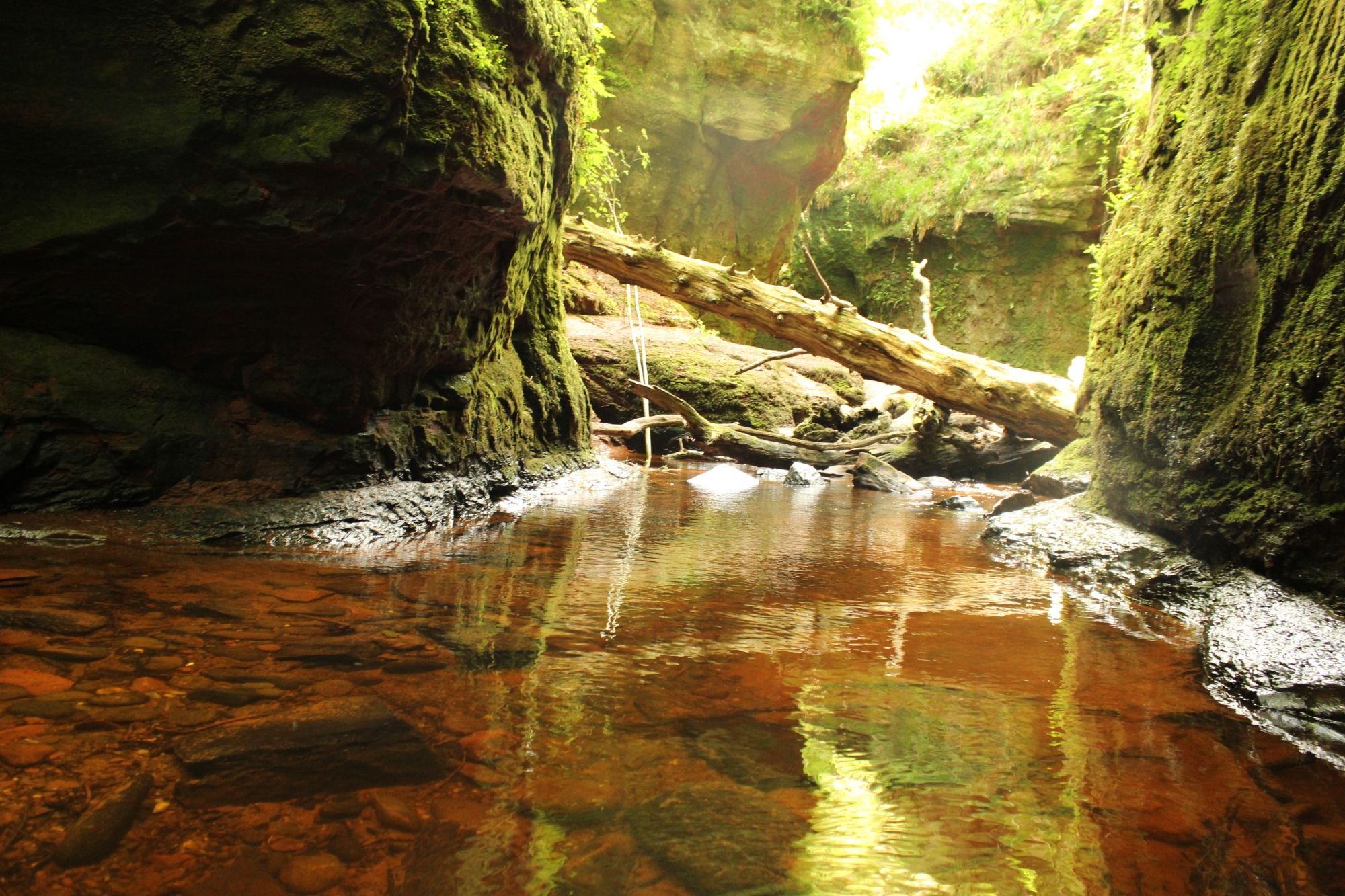
The name "Devil's Pulpit" actually refers to a specific mushroom-shaped rock that rises from the bed of the stream. According to local folklore, the Devil himself used to stand upon this rock to address his followers, shielded by the deep shadows of the glen. In more recent years, the site has gained a new level of fame as a filming location for the hit TV series Outlander. In the show, it served as "St. Ninian's Spring" (or the Liar's Spring), where Dougal MacKenzie uses the "magical" properties of the water to test Claire's honesty. It has also appeared in films like Detective Pikachu and King Arthur: Legend of the Sword, cementing its status as the go-to location for directors seeking a mystical backdrop.
The "Blood" in the Water: A Geological Trick
The most striking feature of the Devil's Pulpit is the color of the water. On first glance, it truly looks like blood is rushing through the gorge. However, there is a perfectly natural explanation. The gorge is carved from Old Red Sandstone, and as the water flows over and through this rock, it picks up a high concentration of iron and peat. When the sunlight hits the shallow water against the red riverbed, it creates a deep, ruby-red glow. The effect is most dramatic after light rain, which washes more sediment into the burn.
Navigating the Descent: Jacob's Ladder
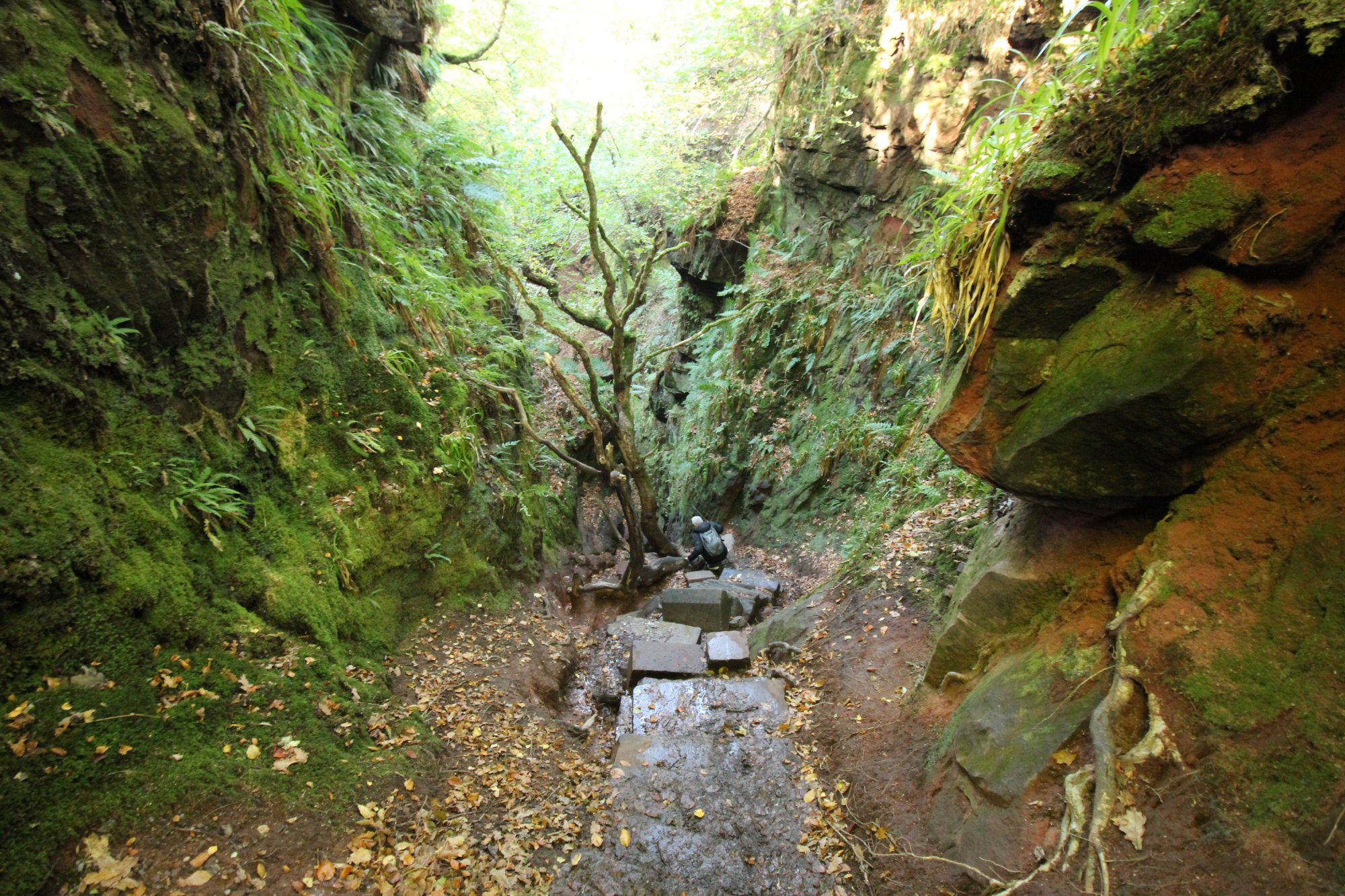
Reaching the floor of the gorge is not for the faint of heart. The primary way down is via a set of steep, crumbling stone steps known as Jacob's Ladder. Built around 1860, these steps have seen nearly two centuries of Scottish weather and are in a state of significant decay. As of 2026, there are no official handrails or safety ropes. Many visitors find themselves scrambling down on all fours in the mud. The steps are narrow, slippery, and often crowded. If you have mobility issues, young children, or a fear of heights, you may find the descent into Finnich Glen to be a step too far. We always recommend visiting with at least one partner—this is not a place you want to be alone if you slip.
The 2026 Parking Headache
Parking at Finnich Glen has become the single biggest challenge for visitors. Because the site is on private land and was never designed as a tourist attraction, there is no official car park.
- The Restrictions: Stirling Council has implemented strict "double yellow lines" on the A809 and B834 roads surrounding the glen. Do not be tempted to "squeeze" onto the verge; the police patrol this area frequently, and fines are issued daily.
- Where to Park: There are a couple of very small lay-bys that can hold a handful of cars, but these are usually full by 8:00 AM.
- The Best Strategy: Arrive as early as possible (ideally before 9:00 AM) or visit on a weekday. Alternatively, some visitors park in the nearby village of Croftamie and walk in, though this adds significant time and distance along busy roads without pavements.
Safety First: A Note of Caution
The Devil's Pulpit is beautiful, but it is also dangerous. Local Mountain Rescue teams are called to Finnich Glen multiple times every year to assist hikers who have slipped on the stairs or become trapped by rising water.
- Water Levels: The Carnock Burn is prone to flash flooding. If it has been raining heavily, do not enter the gorge. The water can rise rapidly, and in such a narrow canyon, there is nowhere to go.
- Footwear: Leave the sneakers at home. You need sturdy hiking boots with excellent grip for the stairs. If you want to walk through the water to see the actual "Pulpit" rock, consider bringing a pair of Neoprene socks or water shoes.
- The Gorge Edge: Before you find the stairs, the path runs along the very top of the cliffs. There are no fences. Stay well back from the edge, as the ground can be undercut and unstable.
Photography Tips: Capturing the Glow
For photographers, the Devil's Pulpit is a dream, but it requires the right light. Because the gorge is so deep and narrow, it is often very dark at the bottom.
- The Best Light: Overcast days are actually better than bright sunshine. Direct sun creates harsh shadows and blows out the highlights on the water. A cloudy sky provides a soft, even light that makes the green moss and red water look incredibly saturated.
- Long Exposure: To get that silky water look, you will need a tripod. However, space is tight at the bottom, so a lightweight travel tripod is best.
- Circular Polarizer: This is essential to remove the glare from the surface of the water and reveal the deep red tones of the riverbed.